TCB Infotech | Expert Odoo & ERPNext Implementation Partner

Schedule Call With Us

Distribution ERP: Move Products Faster, Track Everything, and Stop Losing Margins

Distribution is deceptively complex. From the outside it looks straightforward: buy products, store them, sell them, ship them. But every distributor knows the reality is messier than that. You are managing thousands of SKUs across multiple warehouses, handling customer-specific pricing for different tiers, tracking batch numbers and expiry dates, chasing payments from buyers on 30 to 90 day credit terms, coordinating with dozens of suppliers who all have different lead times, and trying to keep margins healthy in a business where a 2% pricing error on a high-volume product can wipe out a month of profit. Most Indian distributors run this operation on Tally for accounting, Excel for inventory, WhatsApp for order coordination, and memory for everything else. The problems start small (a missed reorder, a pricing mistake, a lost delivery) and compound until the entire operation feels like it is running on borrowed time.

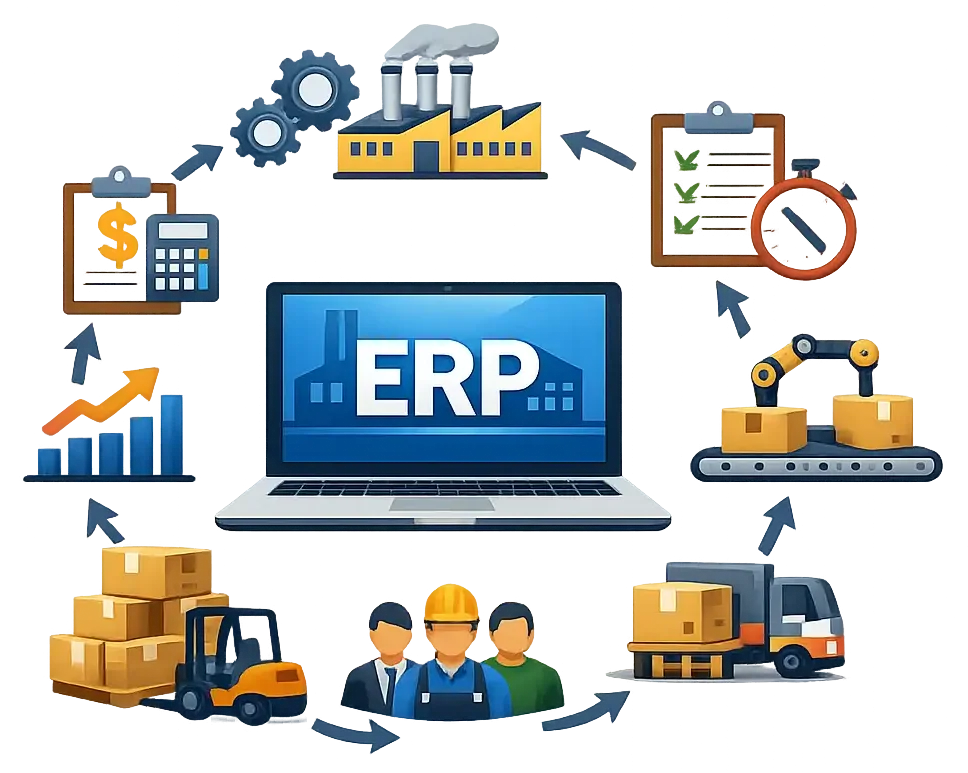
At TCB Infotech, we implement Odoo and ERPNext for distribution and wholesale businesses to replace disconnected systems with a single platform where inventory, purchasing, sales, warehousing, accounting, and logistics all connect. Not a generic ERP with distribution bolted on. A system configured for how distribution actually works.

Book Free Distribution Assessment

What Distribution ERP Actually Solves

Here is what changes when a distributor moves from disconnected tools to a properly implemented ERP:

Real-Time Stock Visibility

You know your real stock levels at all times. Every warehouse, every location, every bin. Real-time. Not yesterday’s Excel export. Not a count someone did last week. Actual stock including committed orders, in-transit goods, and quality holds.

Automated Purchasing

Purchase orders generate themselves. Set reorder levels and minimum quantities per product. When stock drops below thresholds, the system creates purchase drafts for the right supplier at the right price.

Smart Pricing Management

Tier-based pricing, customer-specific rates, volume discounts, promotional pricing, and contract rates all managed in one place. Correct pricing applies automatically during quotation.

Order-to-Cash Flow

Orders flow from quote to delivery to invoice without gaps. Inventory gets reserved, picking lists generate, warehouse fulfils with barcode scanning, and invoices trigger automatically.

Credit Control & Collections

Credit limits are enforced automatically. Orders exceeding limits get blocked. Ageing reports track overdue payments so you don’t ship to customers with pending dues.

Profitability Insights

You see margins by product, customer, and territory. Including landed costs like freight and duties. Identify which products and customers drive profit—and which don’t.

What Distribution ERP is NOT

Setting expectations matters for distributors moving from disconnected systems:

It is not warehouse management software alone. WMS handles physical warehouse operations (bin locations, picking routes, packing). Distribution ERP includes WMS capabilities but also covers purchasing, sales, accounting, credit management, and analytics. You need the full picture, not just the warehouse piece.
It is not going to fix your data quality problems automatically. If your product master has duplicate SKUs, inconsistent naming, or missing units of measure, the ERP will faithfully replicate that mess digitally. We clean and standardise your data as part of implementation.
It is not a plug-and-play system for distributors. Generic ERP templates don’t handle customer-specific pricing tiers, batch and expiry tracking for pharma or FMCG, landed cost calculations, or credit limit enforcement. Distribution needs distribution-specific configuration.
It is not a replacement for your sales team’s relationships. It gives them better tools so they can focus on selling instead of chasing stock information, pricing approvals, and order status updates.

Distribution Challenges We Solve

Real problems distributors face — and how we solve them with structured ERP systems.

Stock-outs on fast-moving products, excess stock on slow movers

ABC analysis, automated reorder rules with min/max levels, demand forecasting based on historical consumption, and real-time stock visibility across all locations

No real-time visibility across multiple warehouses

Multi-warehouse inventory with real-time inter-warehouse transfer tracking, barcode scanning, and consolidated stock reports

Pricing errors eroding margins

Customer-specific pricelists, tiered pricing, volume discounts, and rate contracts that auto-apply on quotations and sales orders

Manual order processing causing delays

Quote to order to picking to delivery to invoice workflow. Automated. One click at each stage, not re-entry in five different systems.

Credit limit violations and overdue collections

Customer credit limits with automatic order blocking. Ageing reports. Payment follow-up automation via email, SMS, or WhatsApp.

Batch and expiry tracking for regulated products

Batch/lot tracking with FEFO (First Expiry First Out) logic, expiry alerts, and full traceability from supplier to customer

Supplier management chaos across dozens of vendors

Vendor master with performance rating, rate contracts, three-way matching (PO vs receipt vs invoice), and automated RFQ generation

No margin visibility at product or customer level

Real-time profitability analysis by product, customer, territory, and salesperson. Landed cost calculation including freight and duties.

GST compliance headaches

Automated GST computation on every transaction. E-invoicing integration. GSTR-1/3B report generation. TDS handling for applicable transactions.

Returns and claims management

Return workflows with reason tracking, credit note generation, stock reintegration or disposal, and claim settlement against suppliers

Distribution Segments We Serve

Distribution is not one business. An FMCG distributor moving 10,000 SKUs daily operates differently from a building materials dealer managing heavy goods with long lead times. Here are the segments we know from direct implementation experience:

FMCG Distribution
High-SKU, high-velocity operations. Batch and expiry tracking is non-negotiable. Route-based delivery scheduling. Salesman order booking from mobile devices. Scheme and promotional pricing management. Retailer credit management with strict limits. Real-time stock visibility for fast-moving and slow-moving analysis.
Pharmaceutical Distribution
Drug License compliance with supplier and customer license tracking. Controlled substance registers. Strict batch and expiry management with FEFO. Recall management with forward traceability. GST compliance for pharma-specific tax codes. Return and near-expiry management with supplier claim workflows.
Building Materials & Hardware
Heavy products with complex unit conversions (per piece, per kg, per running metre, per sqft). Large-order management with partial deliveries. Long supplier lead times requiring advance procurement planning. Godown-level inventory tracking across multiple yards and warehouses.
Auto Parts Distribution
Part number management across multiple vehicle makes and models. Cross-reference catalogues. OEM vs aftermarket pricing. Warranty tracking on parts sold. Returns management with defective claims against manufacturers.
Electronics & IT Distribution
Serial number tracking per unit. Warranty registration and claim management. Multi-brand product catalogues. Channel partner pricing with rebate management. RMA (Return Merchandise Authorisation) workflows.
Industrial & Chemical Distribution
Hazmat classification and handling notes. Certificate of Analysis (CoA) tracking per batch. Supplier quality management. Minimum order quantities with complex unit conversions. MSDS documentation management.
General Trading Companies
Multi-category product management. Import documentation and landed cost calculation. Foreign currency purchasing with INR selling. LC (Letter of Credit) and advance payment tracking. Multi-location warehousing across cities or countries.

Core ERP Modules for Distribution

Every distribution implementation we deliver is built around these core capabilities:

Inventory Management
Multi-warehouse with bin location tracking. Barcode/QR code scanning for receiving, picking, packing, and dispatch. Batch and serial number tracking. FEFO and FIFO inventory logic. Stock ageing analysis. Inter-warehouse transfers. Cycle counting during live operations. Automated stock valuation (weighted average, FIFO, or standard costing).
Sales and Order Management
Customer master with multiple shipping addresses. Customer-specific pricelists and payment terms. Quotation management with validity tracking. Sales order with automatic inventory reservation. Partial delivery management. Back-order tracking. Blanket orders and scheduled deliveries for recurring customers. Sales team and territory assignment.
Purchasing and Procurement
Supplier master with lead time tracking and performance rating. Rate contracts and blanket purchase agreements. Automated purchase order generation from reorder rules. RFQ management for competitive bidding. Three-way matching (PO vs goods receipt vs vendor invoice). Purchase return workflows with credit note tracking.
Warehouse Operations
Pick, pack, and ship workflows with barcode validation. Wave and batch picking for high-volume operations. Putaway rules for incoming stock. Cross-docking for drop-shipment scenarios. Returns receiving with quality inspection. Warehouse performance dashboards (picking accuracy, fulfilment speed, inventory turns).
Accounting and Finance
Integrated with sales, purchasing, and inventory. Automatic journal entries on every transaction. GST, TDS, and e-invoicing compliance. Accounts receivable with ageing and credit limit enforcement. Accounts payable with payment scheduling. Bank reconciliation with AI matching. Multi-currency for importers. Departmental and branch-wise P&L.
Customer Credit Management
Credit limits per customer with automatic order blocking. Payment terms management (advance, COD, 15/30/60/90 day credit). Ageing reports by customer and territory. Automated payment reminders via email, SMS, or WhatsApp. PDC (Post-Dated Cheque) tracking. Bad debt provision management.
Logistics and Delivery
Route planning for delivery vehicles. Delivery scheduling based on vehicle capacity and route. Proof of delivery with mobile signature capture. Transporter management with freight cost tracking. Integration with shipping partners for automated tracking updates. COD collection tracking for cash-on-delivery orders.
Analytics and Business Intelligence
Sales analysis by product, customer, territory, and salesperson. Inventory turnover and stock ageing reports. Margin analysis with landed cost factoring. Supplier performance scorecards. Credit exposure reports. Custom dashboards for management, sales, and warehouse teams.

AI Capabilities for Distribution

Beyond standard ERP, we add AI layers that give distributors a competitive edge in operational efficiency:

Demand Forecasting
Machine learning models trained on historical sales data, seasonal patterns, and market trends. Predict demand by product, territory, and customer segment to reduce stock-outs and overstock.
Intelligent Replenishment
AI-driven reorder suggestions that consider supplier lead times, minimum order quantities, storage capacity, and cash flow constraints. Smarter than static min/max rules.
Smart Document Processing
OCR pipelines for vendor invoices, purchase orders, and shipping documents. Automatically extract data, match against POs, and create accounting entries without manual input.
Natural Language Queries
Your team can ask questions like “top customers by revenue with overdue payments” and get instant answers without building reports.
Customer Churn Prediction
AI identifies customers whose ordering patterns are declining and flags them for proactive engagement before you lose the account.
Route Optimisation
AI-assisted delivery planning that balances vehicle capacity, delivery windows, traffic conditions, and driver availability for efficient logistics.

Our Platform Choices for Distributors

We implement both Odoo and ERPNext for distribution businesses. The choice depends on your specific needs:

Choose Odoo if
You need multi-entity management (separate companies for different regions or product lines). You want e-commerce integration for B2B online ordering. You need advanced marketing automation for customer engagement. You require Odoo Studio for visual customisation without coding. You operate internationally with multi-currency needs.
Choose ERPNext if
You want zero licensing costs and a strong out-of-box distribution workflow. You need simpler implementation with faster go-live. You prefer a system with built-in stock entry, purchase receipt, and delivery note workflows ready from day one. You are a trading company with straightforward operations and under 200 users.
Both platforms handle multi-warehouse inventory, batch tracking, purchase automation, GST compliance, and integrated accounting. The choice comes down to your specific requirements, budget, and scale. Read our Odoo vs ERPNext guide for a detailed comparison

How We Implement Distribution ERP

Distribution implementations require precision across inventory, pricing, and warehouse operations. Here’s our structured approach:

Step 1: Operations Assessment (Week 1 to 2)
We visit your warehouses, sit with your sales team, observe your receiving and dispatch process, and understand your supplier relationships. We document product categories, pricing structures, credit policies, and delivery workflows as they actually work.
Step 2: Data Cleanup and Master Setup (Week 2 to 4)
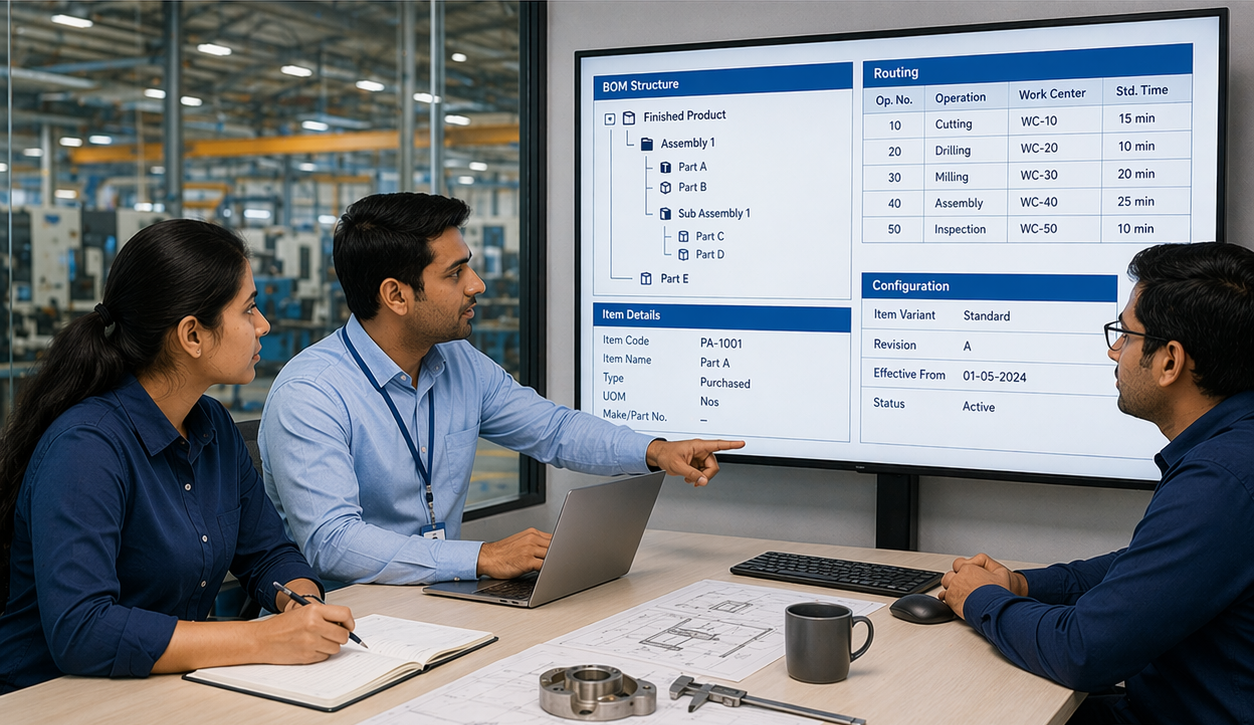
Distribution implementations live or die on data quality. We clean your product master, remove duplicates, standardise naming, fix units of measure, and structure your customer and supplier databases with proper pricing rules and credit limits.
Step 3: System Configuration (Week 4 to 10)
We configure warehouses, bin locations, reorder rules, sales workflows, purchase workflows, pricing tiers, credit policies, GST settings, and reporting dashboards. Every configuration is tested against your real operations.
Step 4: Warehouse Setup and Barcode Integration (Week 8 to 12)
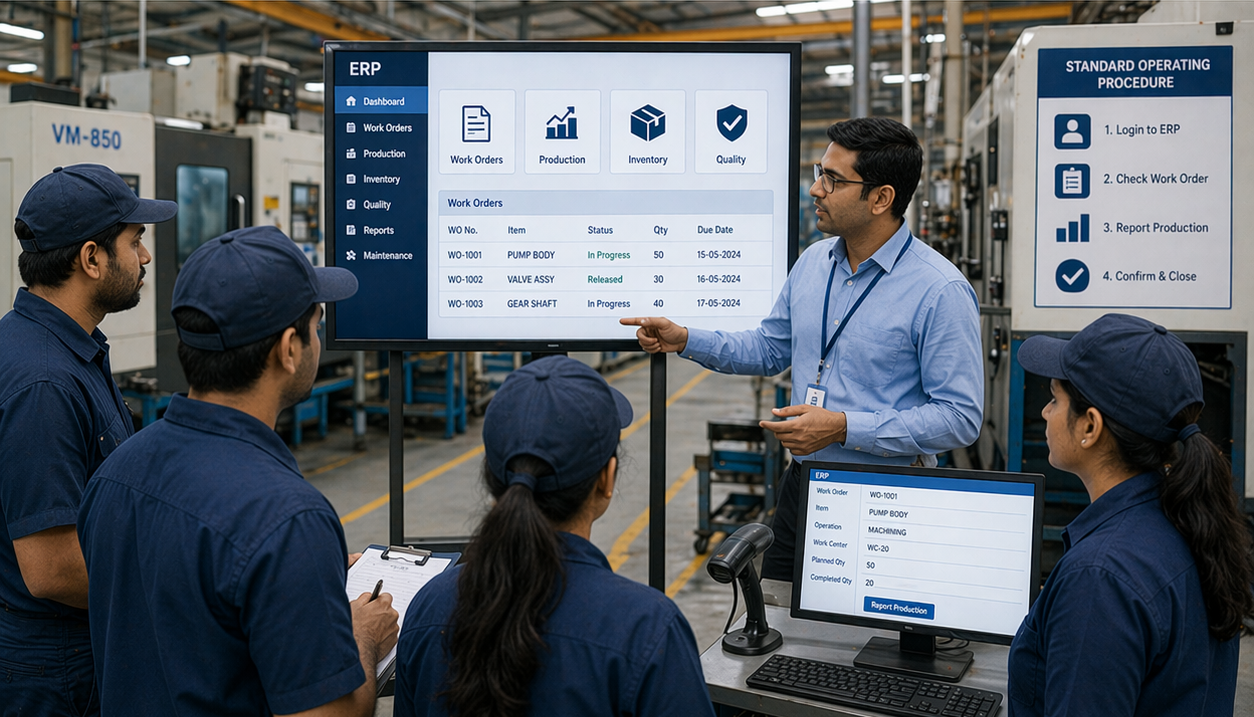
Physical labels for bins, zones, and locations. Barcode scanners or mobile devices configured for receiving, picking, packing, and dispatch. Hands-on training for warehouse teams on daily scanning workflows.
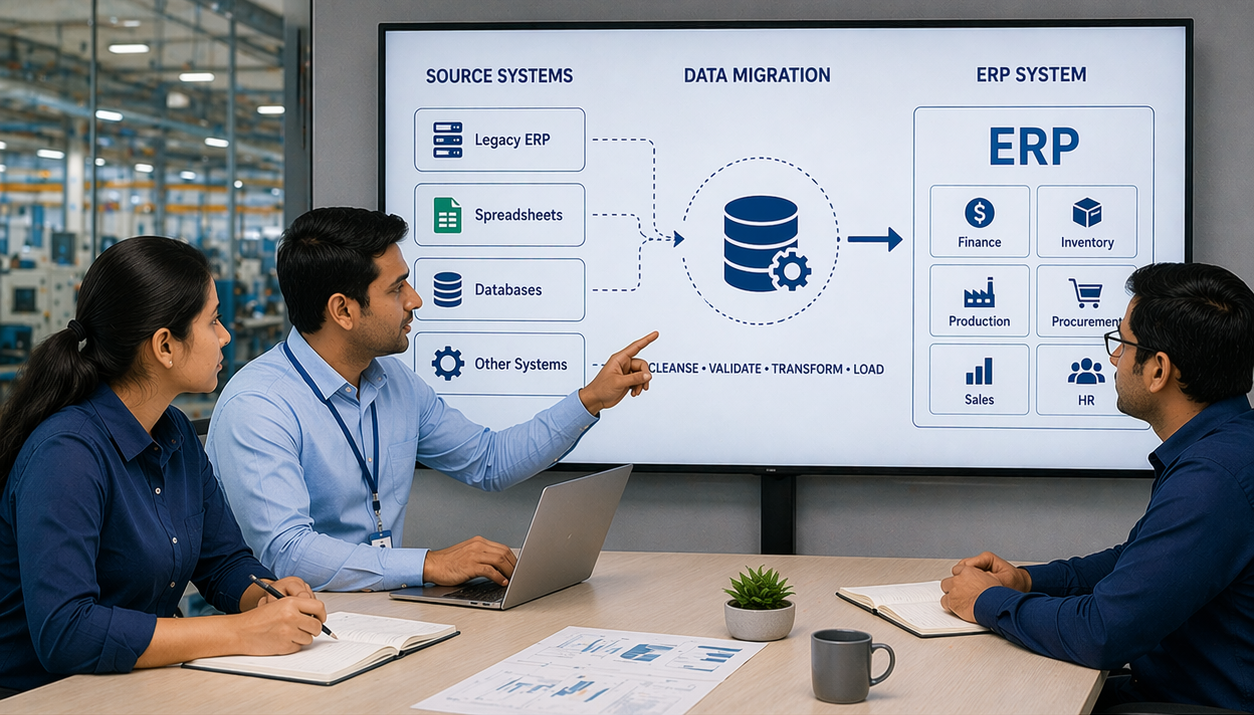
Step 5: Data Migration (Week 10 to 14)
Product master, opening stock with batch/serial details, customer master with credit limits, supplier master with rate contracts, and financial opening balances are migrated from your existing systems like Tally.
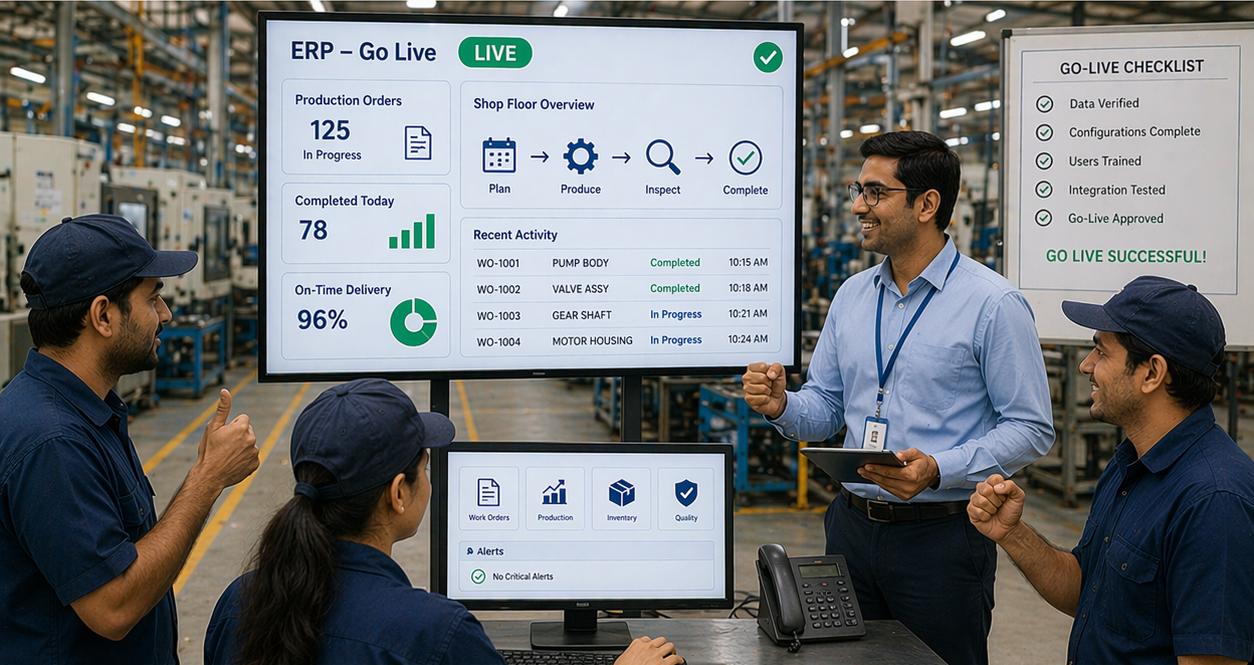
Step 6: Go-Live and Stabilisation (Week 14 to 20)
Phased go-live: inventory and purchasing first, then sales and delivery, then accounting integration. 15 to 60 days post-go-live support. We’re available when a 5,000-piece order hits a barcode issue at 8am.

Results from Real Healthcare Clients

From our actual healthcare implementations:

90%
reduction in medicine expiry wastage through automated FEFO inventory management
↓ Leakage
Revenue leakage reduced by identifying unbilled services, missed charges, and billing code errors
40–60%
procurement cycle reduction through automated purchase workflows and vendor management
1 Day
payroll processing reduced from 3–4 days to less than 1 day with integrated attendance
100%
audit trail readiness for NABH, replacing paper-based documentation
Real-Time
visibility into departmental costs and revenue for the first time

Results Distribution Clients See

Real outcomes from our ERP implementations for distribution businesses:

15 to 25% improvement in inventory accuracy from real-time barcode tracking replacing manual counts and Excel registers
Order processing time reduced from hours to minutes through automated quote-to-delivery workflows
Overdue receivables reduced by 30 to 40% through automated payment reminders and credit limit enforcement
Purchasing time cut by 60% with automated PO generation from reorder rules and rate contract lookups
Margin visibility for the first time at product, customer, and territory level, including landed costs
GST filing time reduced from days to hours with auto-generated GSTR reports and e-invoicing integration
Inter-warehouse stock transfers tracked in real time instead of phone calls and WhatsApp messages

Why TCB Infotech for Distribution

50+

ERP implementations. Zero failures. Since 2021. Distribution is one of our core verticals.

Global Experience

We have implemented for distributors in India, UAE, Oman, and Saudi Arabia, handling multi-location, multi-currency, and cross-border operations.

Platform Flexibility

We implement both Odoo and ERPNext. We recommend what fits your operation, not what is easier for us.

35+ Team

35+ full-time professionals. 100% team retention. Consistent team throughout your project.

Distribution Expertise

We understand distribution economics: thin margins, high volumes, credit risk, and supply chain complexity.

AI + Support

AI-enhanced ERP capabilities for demand forecasting, smart replenishment, and document processing. Post-go-live support that stays with continuous optimisation.

Frequently Asked Questions

How long does distribution ERP implementation take?
For a single-warehouse distributor with under 50 users: 3 to 5 months. For multi-warehouse, multi-location operations with complex pricing and credit management: 5 to 8 months. We provide a realistic timeline during the initial assessment based on your specific complexity.
Can you handle our product catalogue? We have 10,000+ SKUs.
Yes. We have implemented for distributors managing 5,000 to 50,000+ SKUs. The key is proper product master cleanup and structured categorisation during implementation. We handle this as part of the data migration phase.
Will it work with our existing barcode scanners?
Most standard barcode scanners work with Odoo and ERPNext. We also configure mobile phones and tablets as scanning devices for operations where dedicated hardware is not needed.
Can you migrate from Tally?
Yes. We have done dozens of Tally migrations. We bring over your chart of accounts, opening balances, customer and vendor masters, and historical transaction data. Your accounting continuity is maintained.
Does it handle multi-currency for importers?
Yes. Both Odoo and ERPNext support multi-currency purchasing with automated exchange rate updates. Landed cost calculation factors in freight, customs duty, handling charges, and currency conversion to give you the true cost of imported goods.
Odoo or ERPNext for our distribution business?
It depends on your needs and scale. We will give you an honest recommendation in our first conversation based on your product range, customer base, warehouse complexity, and growth plans.

Running your distribution business on Tally, Excel, and WhatsApp?

Let’s talk about what connected operations would look like. No pitch. Just a practical conversation about your specific challenges.

Book Free Distribution Assessment