TCB Infotech | Expert Odoo & ERPNext Implementation Partner

Schedule Call With Us

Real Estate & Construction ERP: Control Your Projects, Materials, Costs, and Sales from One Platform

Real estate and construction is one of the most operationally complex industries to manage. A single residential project involves land acquisition, regulatory approvals, architectural planning, BOQ estimation, material procurement from dozens of vendors, labour and subcontractor coordination across trades, daily site monitoring, milestone-based customer billing, and post-handover maintenance. Every one of these moving parts needs to work in sync, and in most Indian construction companies, they don’t. The typical builder runs projects on a combination of Excel for budgeting, Tally for accounting, WhatsApp for site coordination, and paper registers for material tracking. Cost overruns get discovered weeks after they happen. Material theft goes unnoticed because nobody reconciles what was ordered against what was consumed. Subcontractor RA bills pile up without proper measurement verification. And when a customer calls asking about possession timelines, nobody has a single source of truth to give them an answer.

At TCB Infotech, we implement Odoo and ERPNext for real estate developers, builders, construction contractors, and infrastructure companies. Not generic ERP with construction labels pasted on it. Systems configured for how construction actually works: project-by-project budgeting, BOQ-driven procurement, milestone-based billing, subcontractor management, and RERA-compliant customer workflows.

Book Free Construction Assessment

What Real Estate & Construction ERP Actually Solves

From project costing to compliance, ERP brings complete control and visibility across your construction and real estate operations:

Project Financial Visibility

Real-time budget vs actual tracking per project, phase, and cost head. Track material, labour, subcontractor, and overhead costs with no surprises.

Procurement Automation

BOQ-driven material planning, automated purchase orders, vendor rate contracts, and three-way matching to control costs and reduce wastage.

Subcontractor Billing

RA billing with measurement sheets, automated retention, advance adjustments, and TDS. Transparent payments reduce disputes.

Property Sales & CRM

Lead to booking tracking, unit inventory management, demand letters, payment tracking, and automated agreement generation.

RERA Compliance

Project registration tracking, fund utilisation, customer payment linking, and real-time data for quarterly compliance reporting.

Labour & Workforce Management

Attendance tracking, labour allocation, wage calculation, PF/ESIC compliance, and contractor-wise workforce reporting.

What This ERP is NOT

It is not architectural design software. Tools like AutoCAD, Revit, and BIM platforms handle design and drawings. ERP manages the financial, operational, and execution layer that turns those designs into completed projects.
It is not a standalone project scheduling tool. Software like Primavera or MS Project handles detailed CPM scheduling for large infrastructure projects. ERP includes milestone tracking and timelines, but integrates with specialised tools where needed.
It is not a property listing portal. Platforms like 99acres or MagicBricks generate leads. ERP manages your internal sales process — from lead tracking and booking to payment collection and agreement management.
It will not work without site-level discipline. If material receipts are not recorded, labour attendance is skipped, or work measurements are not updated, the ERP cannot deliver accurate project visibility. Process adoption is critical.

Challenges We Solve for Real Estate & Construction

Operational and financial challenges developers and contractors face — and how ERP solves them in a structured way.

Cost overruns discovered too late

Real-time budget vs actual tracking per project, phase, and cost head with alerts before overruns become critical.

Material wastage and pilferage at sites

Gate-level receipt logging, BOQ-based consumption tracking, and variance reports for full material visibility.

Subcontractor RA billing disputes

Measurement-based billing with automated retention, advance recovery, and TDS for transparent settlements.

No single view of property sales and payments

Unit-wise inventory, booking tracking, demand letters, and payment visibility fully integrated with accounting.

RERA compliance assembled manually

Automated fund utilisation tracking and real-time project data for faster quarterly reporting.

Vendor payments without proper verification

Three-way matching (PO, receipt, invoice) ensures payments only happen for verified deliveries.

Labour attendance and wage tracking on paper

Mobile/biometric attendance with automated wage calculation including PF, ESIC, and labour cess.

Multi-project finances mixed together

Project-wise P&L with separate cost centres and consolidated reporting across all projects.

Post-handover customer complaints untracked

Service request tracking with ticketing, resolution workflows, and complete customer communication history.

Real Estate & Construction Segments We Serve

Real estate and construction businesses operate very differently based on project type, scale, and execution model. Here’s where our experience lies:

Residential Real Estate Developers
Multi-project portfolio management. Unit inventory (flats, plots, villas) with status tracking (available, booked, sold, registered). Customer lifecycle from lead to booking to agreement to payment to possession to post-sale service. Construction-linked payment schedule management. Demand letter automation. RERA project accounting. Society handover documentation.
Commercial Real Estate Developers
Office space and retail unit leasing management. Tenant billing (rent, CAM charges, utilities). Lease agreement tracking with renewal alerts. Fit-out project management for tenant customisations. Common area maintenance budgeting and expense tracking.
Construction Contractors (Civil, MEP, Finishing)
BOQ-based project estimation and cost tracking. Material procurement linked to project requirements. Subcontractor management with RA billing and retention. Labour management across multiple sites. RA billing to clients with measurement sheets. Equipment and machinery tracking.
Infrastructure and EPC Companies
Long-duration project management (roads, bridges, pipelines). Chainage-based or milestone-based progress tracking. Running account billing to government or institutional clients. Joint venture accounting. Equipment fleet management with utilisation and maintenance tracking. Multi-location project coordination.
Interior Design & Fit-Out Companies
Project-based costing with material and labour breakdowns. Client approval workflows for design revisions. Vendor management for specialised materials (marble, hardware, fixtures). Installation scheduling across multiple concurrent projects. Client billing linked to milestone completion.
Property Management Companies
Building and society management for residential and commercial properties. Maintenance billing to owners and tenants. Vendor management for facility services (security, housekeeping, landscaping). Complaint and service request tracking. Common area maintenance (CAM) budgeting and accounting.

Core ERP Modules for Real Estate & Construction

Every implementation is built around these modules, configured for project-driven operations:

Project Management & Cost Control
Project master with phases, milestones, and timelines. BOQ (Bill of Quantities) management with item-wise budgeting. Budget vs actual tracking with variance alerts. S-curve progress tracking. Gantt chart views for milestone scheduling. Project-wise P&L statements. Multi-project portfolio dashboards showing status, budget health, and completion percentages across all active projects.
Procurement & Material Management
Material indent from site linked to project BOQ. Purchase requisition with approval workflows. Vendor rate contracts and comparative quotation analysis. Purchase order generation with budget availability check. Gate-level material receipt with quality verification. Material issue to project with consumption tracking. Stock management for centralised stores and site-level inventory. Three-way matching before vendor payment.
Subcontractor & Labour Management
Subcontractor master with trade classification, rate agreements, and performance history. Work order generation linked to BOQ items. Measurement sheets for work done recording. RA bill generation with automatic retention deduction and advance recovery. TDS computation and deduction. Labour attendance (daily-rate and piece-rate workers). Trade-wise deployment tracking across projects. Labour cess and compliance calculations.
Property Sales CRM
Lead capture from multiple channels (walk-in, portal, digital marketing, broker referral). Site visit scheduling and follow-up tracking. Unit availability and pricing management. Booking workflow with token collection. Payment schedule generation (construction-linked or time-linked). Demand letter automation on milestone completion. Payment tracking per customer per unit with receipt generation. Agreement and registration support documentation. Broker commission tracking and payout management.
Accounting & Finance
Double-entry accounting with project-wise cost centres. Revenue recognition on percentage of completion or milestone basis. GST compliance for construction services (forward charge and reverse charge under RCM). TDS management on subcontractor and vendor payments. RERA account fund tracking. Customer advance and EMI reconciliation. Joint venture accounting for partnership projects. Bank loan and interest tracking.
Equipment & Machinery Management
Equipment register with ownership details, insurance, and fitness certificates. Utilisation tracking (hours operated, idle time, fuel consumption). Maintenance scheduling (preventive and breakdown). Equipment allocation to projects with cost allocation. Hire charges tracking for rented equipment. Operator assignment and deployment tracking.
Customer Service & Handover
Unit inspection checklist management. Snag list tracking with resolution assignment. Handover documentation generation. Warranty period tracking per unit. Post-handover service request management with ticket system. Customer communication log. Society or association formation documentation support.

RERA and Regulatory Compliance

RERA (Real Estate Regulation and Development Act) has fundamentally changed how Indian developers must operate. Transparency, fund segregation, and timely delivery are no longer optional. ERP supports this by:

Maintaining separate project accounts with fund utilisation tracking per RERA requirements
Linking customer payments to specific project accounts automatically
Providing real-time data for quarterly RERA progress updates (project completion %, funds received, funds utilised)
Maintaining complete audit trails on all financial transactions
Generating customer-facing payment statements and demand letters with proper documentation
GST compliance on construction services including reverse charge mechanism handling
TDS compliance on subcontractor and vendor payments with automated certificate generation
Labour cess computation and tracking per project

AI Capabilities for Real Estate & Construction

Beyond standard ERP, we add AI layers that help developers and contractors control costs, optimise procurement, and improve project execution:

Project Cost Forecasting
Machine learning models analyse historical project data to predict cost overruns before they happen, enabling early corrective action.
Smart Material Procurement
AI-driven demand prediction based on BOQ, project schedules, and consumption patterns helps reduce emergency purchases and optimise vendor pricing.
Intelligent Document Processing
OCR for vendor invoices, challans, and subcontractor bills. Automatically extracts data and matches against POs to eliminate manual entry errors.
Natural Language Queries
Ask questions like “projects where steel consumption exceeds BOQ by 10%” and get instant insights without building reports.
Customer Churn Detection
AI identifies leads going cold based on engagement patterns and triggers proactive follow-ups before potential buyers drop off.
Equipment Maintenance Prediction
For IoT-enabled machinery, AI predicts equipment failures based on usage patterns and sensor data, reducing downtime and maintenance costs.

Platform Choices for Real Estate & Construction

We recommend the platform based on your project complexity, sales model, and operational requirements.

Choose Odoo if
You run multiple concurrent projects with complex procurement. You need a strong CRM for property sales with marketing automation. You want Odoo Studio for visual customisation of project dashboards and approval workflows. You operate across India and GCC with multi-currency needs. You need mobile apps for site engineers and sales teams.
Choose ERPNext if
You want zero licensing costs. You need strong project-based accounting and procurement out of the box. You are a construction contractor (not a developer) focused on cost tracking and billing. You prefer simpler implementation with faster go-live. Budget is the primary constraint.
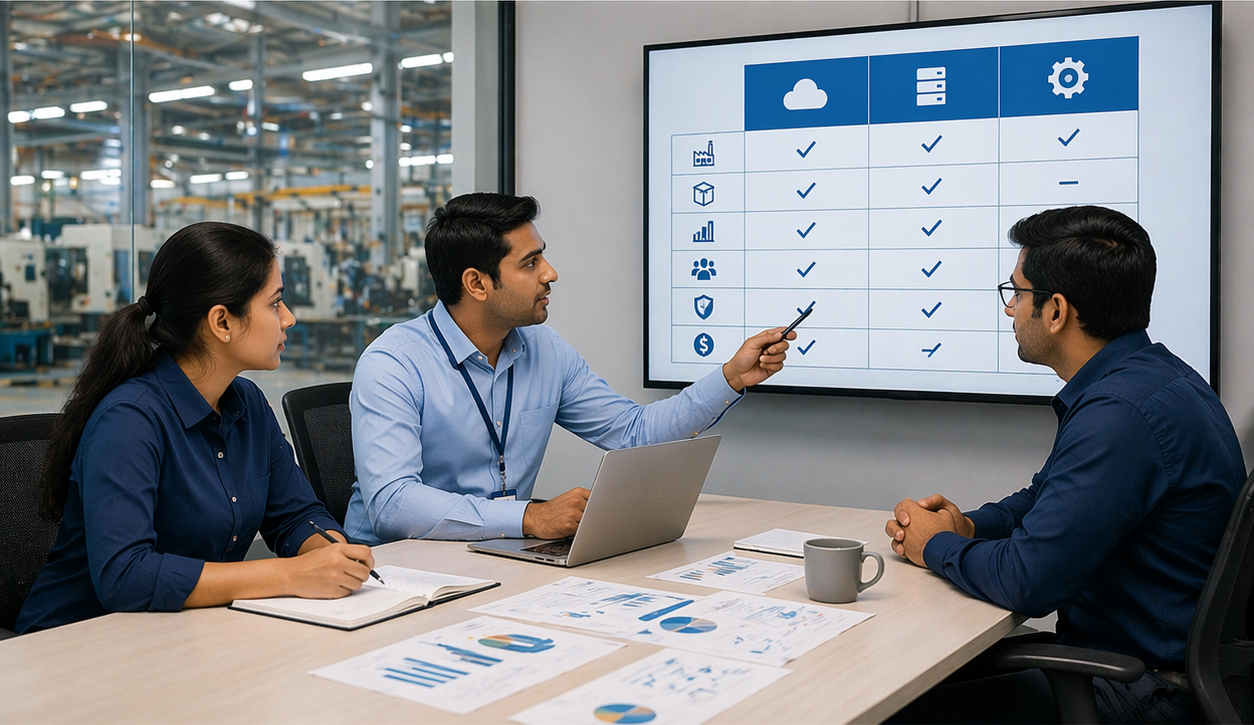
Both platforms handle project-wise accounting, procurement, vendor management, and HR/payroll. The choice depends on whether you need a strong sales CRM (Odoo), zero licensing costs (ERPNext), or specific features for your operation type.

How We Implement Real Estate & Construction ERP

Real estate ERP implementations require alignment between projects, procurement, sales, and finance. Here’s our structured approach:

Step 1: Project and Operations Assessment (Week 1 to 3)
We visit your sites and head office. We understand your project types, cost structures, procurement workflows, subcontractor management, sales process, and accounting practices. We document how money flows from customer to project to vendor.

Step 2: System Design and Configuration (Week 3 to 10)
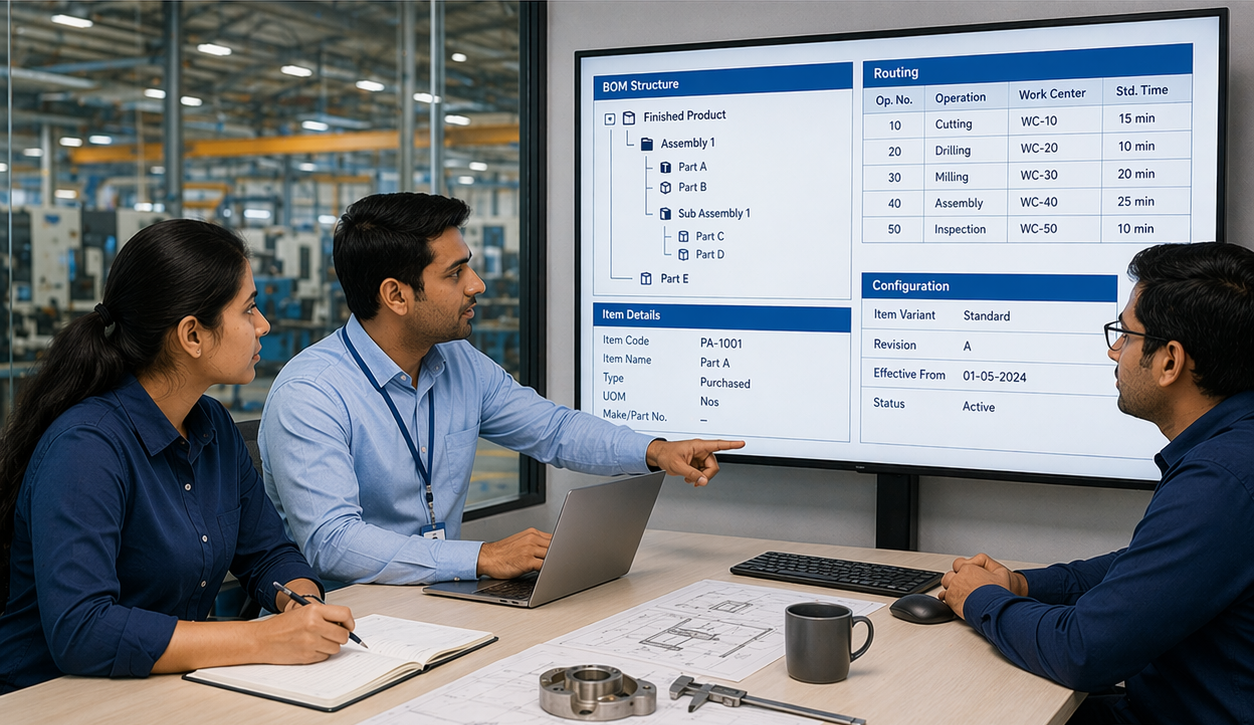
Project structure setup (phases, milestones, BOQ items). Vendor and subcontractor master setup. Procurement approval workflows. RA billing templates. Customer payment schedules. Chart of accounts with project-wise cost centres. RERA account configuration with GST and TDS settings.
Step 3: Data Migration (Week 8 to 14)
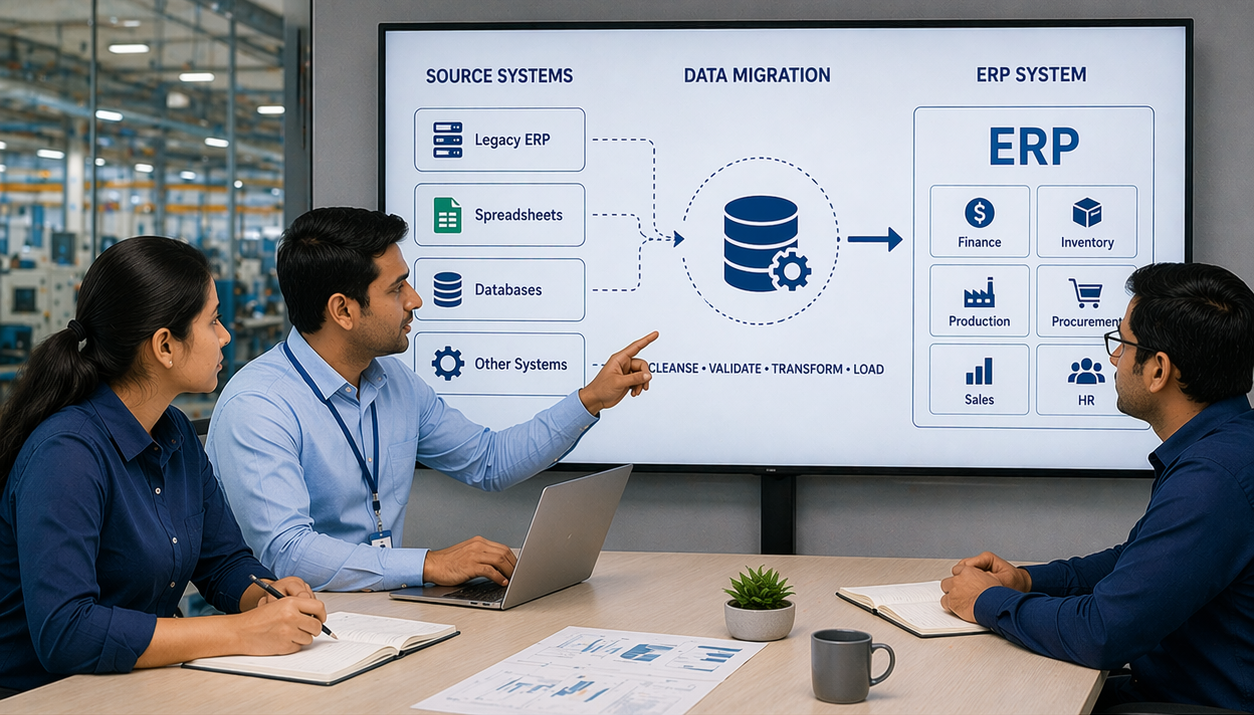
Active project data (budgets, commitments, WIP). Customer master with booking details and payment history. Vendor and subcontractor records with outstanding balances. Employee data. Opening financial balances migrated from Tally.
Step 4: Training (Week 10 to 16)
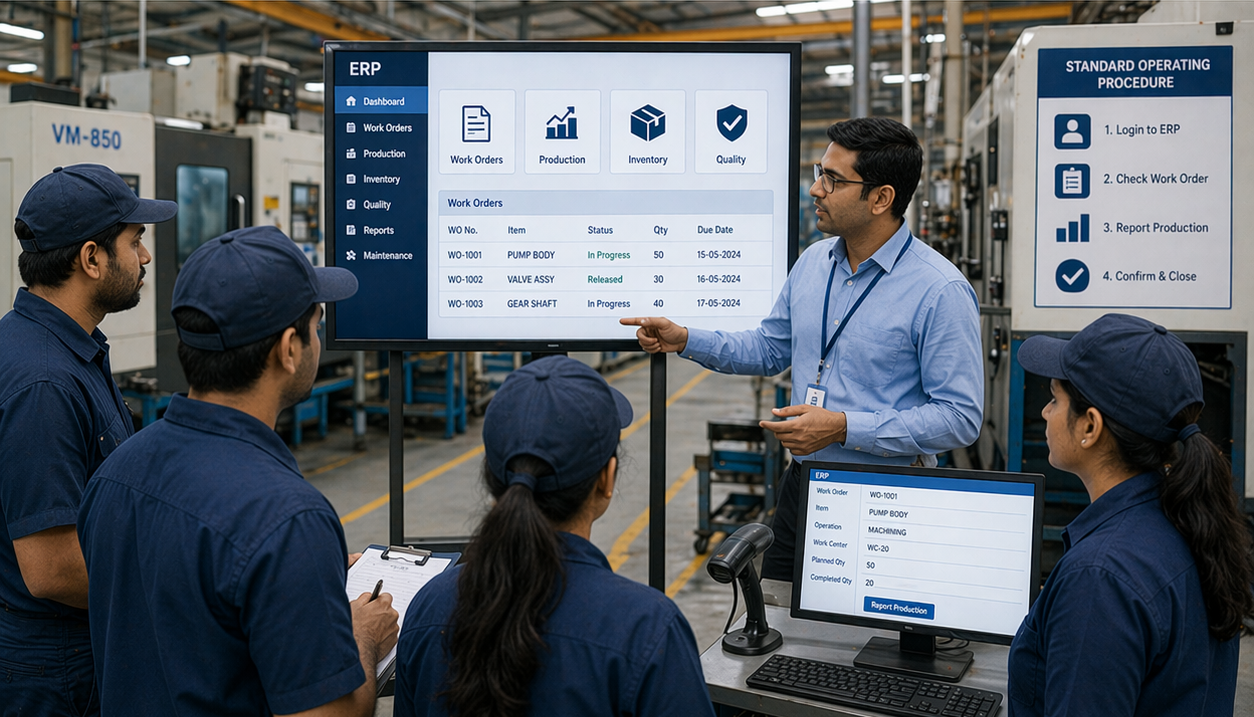
Role-based training for site engineers (material tracking, attendance), procurement teams (PO workflows, three-way matching), sales teams (CRM, booking, payment tracking), accounts teams (project accounting, GST, TDS), and management (dashboards and reporting).
Step 5: Go-Live (Week 14 to 20)
Phased go-live starting with procurement and project cost tracking, followed by sales CRM and customer management, then HR and accounting integration. Best aligned with a new project or financial year. Includes 30 to 60 days of post-go-live support.

Results Real Estate & Construction Clients See

Real outcomes from our ERP implementations for developers and contractors:

Project cost overruns reduced by 15 to 25% through real-time budget tracking and procurement controls
Material wastage reduced by 20 to 30% through BOQ-based consumption tracking and gate-level receipt logging
Subcontractor payment disputes reduced by 60% through measurement-based RA billing with transparent calculations
Procurement cycle reduced by 40% with automated PO generation, rate contract enforcement, and approval workflows
Customer payment follow-up automated, reducing outstanding collections by 25 to 35%
RERA compliance data available in real time instead of assembled manually before quarterly deadlines
Multi-project financial visibility achieved for the first time with project-wise P&L and consolidated reporting

Why TCB Infotech for Real Estate & Construction

50+

ERP implementations. Zero failures. Since 2021. Real estate and construction is one of our core served industries.

Industry Expertise

We understand construction economics: multi-project cash flows, retention money, RA billing, RERA requirements, and complex vendor and subcontractor ecosystems.

Platform Flexibility

We implement Odoo and ERPNext. We recommend what fits your operation, not what is convenient for us.

35+ Team

35+ full-time professionals. 100% team retention. The same team works with you from assessment to go-live.

India + GCC Experience

Experience across India, UAE, and Oman with deep understanding of both domestic and GCC construction practices and compliance needs.

AI + Long-Term Support

AI-driven capabilities for cost forecasting, smart procurement, and document processing with post-go-live support through your full project lifecycle.

/

Frequently Asked Questions

How long does education ERP implementation take?
For a single-campus school or coaching institute: 2 to 4 months. For a college or multi-department institution: 4 to 6 months. For a multi-campus university or school chain: 6 to 10 months. We recommend go-live at the start of a new academic session or financial year.
Can you integrate with our existing academic software (SIS/LMS)?
Yes. We integrate ERP with your existing academic systems through APIs. Student and attendance data can sync between systems while ERP handles finance, operations, and administration.
We already use Tally. Why do we need ERP?
Tally handles accounting only. It does not manage fee tracking at student level, HR/payroll, procurement workflows, asset management, hostel, transport, or library operations. ERP connects all these functions into one system.
Does it handle government-aided institution requirements?
Yes. We configure grant accounting, fund utilisation tracking, government fee reimbursement workflows, and reporting formats required by education authorities.
Can parents pay fees online?
Yes. We integrate payment gateways like Razorpay, PayU, and UPI. Parents can pay online and receive instant confirmations. Payments automatically update accounting records.
Odoo or ERPNext for our institution?
ERPNext works well for single-campus schools and smaller colleges with its built-in Education module. Odoo is better for multi-campus institutions, advanced workflows, and deep customisation. We recommend based on your specific needs.

Running construction projects on Excel budgets and WhatsApp coordination?

Let’s talk about what controlled, visible, and compliant operations would look like for your business.

Book Free Construction Assessment