TCB Infotech | Expert Odoo & ERPNext Implementation Partner

Schedule Call With Us

NBFC ERP: Manage Loans, Collections, Compliance, and Finances from One Platform

Running an NBFC in India means operating at the intersection of financial services, technology, and regulation. You are originating loans, managing disbursements, tracking EMIs from hundreds or thousands of borrowers, handling collections (including field visits for delinquent accounts), staying compliant with RBI’s constantly evolving guidelines, and running the back-office operations of accounting, HR, and branch management that keep everything functioning. Most NBFCs cobble this together with a mix of loan management software for the lending side, Tally for accounting, Excel for MIS, and separate tools for HR and collections. The result is data that lives in five different places, manual reconciliation that takes days, compliance reports assembled by pulling numbers from multiple systems, and an operations team spending more time on data entry than on decisions.

At TCB Infotech, we build integrated ERP solutions for NBFCs that connect the operational backbone (accounting, HR, procurement, branch management) with loan lifecycle management and compliance workflows. We use Odoo, ERPNext, and custom development depending on what your operation needs. The goal is always the same: one connected system where lending operations, financial management, and regulatory compliance work together instead of against each other.

Book Free NBFC Assessment

What NBFC ERP Actually Covers

NBFC ERP is not a loan origination system (LOS) or a loan management system (LMS) by itself. Those are lending-specific tools. NBFC ERP manages the operational and financial backbone that supports your lending business. In many cases, it integrates with or replaces your LOS/LMS to create a unified platform.

Here is what a properly implemented NBFC ERP handles:

Accounting and Financial Management

The backbone of every NBFC. Double-entry accounting with multi-branch consolidation. Loan portfolio accounting (disbursement entries, interest accrual, EMI receipts, NPA provisioning). GST compliance on processing fees and service charges. TDS handling on interest payments. Bank reconciliation with automated matching. P&L by branch, product, and region. Balance sheet preparation aligned with RBI reporting formats.

Loan Portfolio Tracking

Centralised view of your entire loan book. Outstanding principal, accrued interest, EMI schedules, repayment status, overdue tracking, and NPA classification (SMA-0, SMA-1, SMA-2, NPA). This is the bridge between your lending operations and your financial statements.

Collection Management

EMI due tracking, automated payment reminders (SMS, WhatsApp, email), PDC (Post-Dated Cheque) management, NACH/ECS mandate tracking, field collection agent assignment and tracking, receipt generation, and settlement posting to accounting. For NBFCs with field collection teams, mobile apps for agents to log visits, collect payments, and record outcomes.

Regulatory Compliance and Reporting

RBI return preparation (NBS-1 to NBS-9, ALM statements, NPA reports). KYC documentation management with expiry tracking. AML compliance workflows. CERSAI charge registration tracking. Fair Practices Code documentation. Digital Lending Directions 2025 compliance (if operating through LSPs). Audit trail on every financial transaction for RBI inspection readiness.

Human Resources and Payroll

Branch-wise staff management. Attendance tracking across multiple locations. Leave management. Payroll processing with PF, ESIC, professional tax, and TDS compliance. Field agent incentive and commission calculations. Employee document management (KYC, appointment letters, performance records). Recruitment pipeline for branch expansion.

Branch Operations

Multi-branch management with branch-level P&L. Cash management and petty cash tracking at each branch. Asset management for branch infrastructure (furniture, computers, safe deposit). Consumables and stationery procurement. Branch performance dashboards.

Customer Relationship Management

Borrower database with complete history (applications, sanctions, disbursements, repayments, communications). Lead management for new loan enquiries. Customer communication logs. Complaint tracking and resolution workflows. Upsell and cross-sell tracking for existing customers.

Document Management

Centralised digital storage for loan agreements, KYC documents, property documents (for secured loans), NOCs, CERSAI certificates, insurance policies, and correspondence. Version control and access management. Retrieval during audits or legal proceedings.

What NBFC ERP is NOT

It is not a replacement for a full-fledged Loan Origination System (LOS) with credit scoring, bureau integration, and underwriting engines. If you need a sophisticated LOS with Aadhaar eKYC, CIBIL/CRIF integration, and automated credit decisioning, you need a specialised lending platform. We can build this as a custom module or integrate with existing LOS providers.
It is not banking software. NBFCs are not banks. Your regulatory requirements, product structures, and operational workflows are different. Generic banking software is overkill and misconfigured for NBFC operations.
It will not make you compliant automatically. The system provides the infrastructure for compliance (audit trails, report formats, documentation workflows). But compliance is a combination of the right systems, the right processes, and the right people. We configure the systems and help define the processes.
It is not a one-time project. RBI guidelines change. Your product mix evolves. Branch networks expand. The ERP needs to grow with you. We build for adaptability, not just day-one requirements.

Challenges NBFCs Face (And How We Solve Them)

Real operational and compliance challenges NBFCs face — and how we solve them with a structured ERP approach.

Accounting and loan portfolio tracking in separate systems

Integrated ERP where loan disbursements, EMI receipts, interest accrual, and NPA provisioning post to accounting automatically. One unified ledger.

RBI compliance reports assembled manually from multiple sources

Pre-configured RBI return templates (NBS, ALM, NPA reports) pulling data directly from loan and accounting modules. Generate in hours, not days.

Collection follow-up falling through the cracks

Automated EMI reminders, overdue escalation workflows, field agent tracking with mobile apps, and PDC/NACH dashboards.

NPA identification happening too late

Real-time SMA classification (SMA-0/1/2), automated alerts, and provisioning calculations aligned with RBI norms.

No visibility into branch-level profitability

Branch-wise P&L tracking with revenue (interest, fees) and cost breakdowns across regions and products.

HR and payroll chaos across multiple branches

Centralised HR with attendance, payroll (PF/ESIC/TDS), incentive calculations, and employee lifecycle management.

KYC documents scattered across branches

Centralised digital document management with borrower-linked storage, expiry tracking, and instant audit retrieval.

Interest calculation discrepancies

Automated interest computation (reducing balance, flat rate, monthly rest) with transparent logs and borrower-ready statements.

Digital Lending Directions 2025 compliance

Workflows aligned with RBI Digital Lending norms: RE account fund flow, LSP tracking, borrower disclosures, and audit-ready reporting.

NBFC Types We Serve

Different NBFC categories have different product structures, regulatory requirements, and operational workflows. Here is where our experience lies:

NBFC-ICC (Investment and Credit Companies)
The most common category. Personal loans, business loans, working capital financing, and secured lending. Core needs: loan lifecycle management, collection tracking, NPA monitoring, RBI compliance reporting, and integrated accounting with portfolio tracking.
NBFC-MFI (Microfinance Institutions)
Small-ticket group and individual lending in rural and semi-urban areas. High borrower volumes, low ticket sizes, weekly or biweekly collection cycles. Field agent mobile apps for loan applications and collections. Group meeting management. SHG (Self Help Group) ledger tracking. Social performance monitoring.
Gold Loan NBFCs
Secured lending against gold ornaments. Rapid disbursement workflows (customers expect same-day processing). Gold appraisal recording (weight, purity, value). Vault and packet tracking per branch. Interest accrual with auction alert triggers for overdue accounts. High branch density operations requiring strong branch management tools.
Vehicle Finance NBFCs
Two-wheeler, car, and commercial vehicle financing. Dealer management and dealer incentive tracking. Vehicle hypothecation and RC book tracking. Insurance renewal monitoring. Repossession workflows for defaulted accounts. EMI collection through NACH mandates and field visits.
Housing Finance Companies
Long-tenure secured lending. Property document management. Construction-linked disbursement schedules. Technical and legal verification tracking. Co-applicant and guarantor management. Subsidy tracking (PMAY). NHB reporting compliance.
Equipment and Asset Finance
Lease and hire-purchase accounting. Asset tracking linked to loan accounts. Insurance and maintenance monitoring. End-of-term options management (buyout, return, re-lease). Complex interest and depreciation calculations.

Core ERP Modules for NBFCs

Every NBFC implementation we build includes these core modules configured specifically for financial services operations:

Accounting Module
Chart of accounts structured per RBI guidelines. Automated journal entries for loan disbursement, interest accrual (daily/monthly/quarterly), EMI receipt allocation (principal vs interest), penal interest, bounce charges, and NPA provisioning. GST on processing fees and service charges. TDS on interest payments above threshold. Bank reconciliation with automated matching for high-volume transactions. Multi-branch consolidation. Budget tracking per branch and department.
Loan Portfolio Module
Loan master with product-wise configuration (interest rates, tenure, moratorium, prepayment penalties). Disbursement tracking (full and partial). EMI schedule generation with different calculation methods. Repayment tracking with automatic allocation to interest, principal, and charges. Loan restructuring and rescheduling workflows. Loan closure and NOC generation. Portfolio analysis dashboards (AUM, PAR, collection efficiency, vintage analysis).
Collection Module
Due date calendar with automated reminders (SMS, WhatsApp, email, IVR). Overdue bucket classification (1–30, 31–60, 61–90, 90+ days). PDC management (issuance, presentation, bounce tracking, replacement). NACH/ECS mandate creation and status monitoring. Field agent assignment with territory mapping. Mobile collection app with GPS tracking, payment receipt, and visit outcome logging. Settlement and waiver workflows with approval hierarchies.
Compliance & Reporting Module
RBI return formats: NBS-1 (basic data), NBS-2 (ALM), NBS-3 (quarterly return on NPAs), NBS-4 (annual return). CERSAI charge registration tracking for secured loans. KYC document management with validity monitoring (Aadhaar, PAN, address proof). AML screening integration. Audit trail on every transaction. Board reporting packages. Statutory audit data extraction.
HR and Payroll Module
Employee database with branch assignment. Attendance management (biometric, mobile, or manual). Leave management with branch-specific rules. Payroll with PF, ESIC, professional tax, gratuity, and TDS. Field staff incentive calculations (per disbursement, per collection, per recovery). Recruitment and onboarding for branch expansion. Training record management. Background verification tracking for new hires.
Branch Operations Module
Branch master with operational details. Cash balance tracking per branch. Petty cash management with approval workflows. Asset register for branch equipment and furniture. Stationery and consumables procurement. Branch-level expense tracking flowing to branch P&L. Inter-branch fund transfer tracking.
CRM Module
Lead capture from multiple channels (walk-in, website, referral, partner, digital marketing). Lead assignment rules by product and territory. Follow-up tracking with outcome logging. Conversion tracking from lead to application to sanction to disbursement. Borrower communication history. Cross-sell identification for existing customers (top-up loans, new product eligibility).

RBI Compliance & Regulatory Readiness

Compliance is built into the system from day one — not added later.

NPA
RBI Returns
KYC / AML
Digital Lending
Audit
NPA Classification
Automated classification based on days past due per RBI norms. SMA-0 (1–30 days), SMA-1 (31–60 days), SMA-2 (61–90 days), NPA (90+ days). Real-time dashboards showing portfolio health by classification bucket. Provisioning calculations based on current RBI provisioning norms.
RBI Returns
Pre-built templates for quarterly and annual returns. Data pulls directly from the loan and accounting modules. Dramatically reduces the manual effort of compiling returns from multiple spreadsheets.
KYC and AML
Document storage linked to borrower profiles. Expiry alerts for time-bound documents. Sanction list screening integration. Transaction monitoring rules for suspicious activity flagging. Record retention per regulatory timelines.
Digital Lending Compliance
For NBFCs operating through digital channels or LSP partnerships, the system tracks fund flow through RE accounts (no pass-through to LSPs), maintains borrower disclosure records, logs all LSP contracts and monitoring activities, and supports DLA reporting to CIMS portal.
Audit Readiness
Every financial transaction carries a complete audit trail: who created it, who approved it, when it was modified, and why. During RBI inspections or statutory audits, you can pull any transaction history instantly instead of searching through files.


AI Capabilities for NBFCs

Beyond traditional ERP, we add AI layers that help NBFCs reduce risk, improve collections, and make smarter lending decisions:

Predictive NPA Identification
Machine learning models analyse repayment patterns to identify accounts likely to become delinquent before default. Enables proactive intervention instead of reactive collections.
Intelligent Document Processing
OCR and AI extraction for KYC documents, income proofs, bank statements, and property records. Reduces manual data entry and speeds up loan processing workflows.
Smart Collection Prioritisation
AI-driven scoring models rank borrowers based on recovery probability, outstanding amount, and behaviour patterns, helping teams focus on high-impact collections.
Natural Language Queries
Ask complex portfolio questions in plain language like “gold loans with LTV above 75% overdue by 30 days” and get instant answers without building reports.
Fraud Detection Patterns
AI identifies suspicious application patterns, duplicate identities, and inconsistencies in borrower data to reduce fraud risk during loan origination.
Cash Flow Forecasting
Predict collection inflows using historical repayment data, seasonal trends, and portfolio composition to improve liquidity planning and treasury management.

Our Platform Choices for NBFCs

We don’t push one approach. We recommend what fits your lending model, compliance needs, and growth plans.

Odoo
Strong for NBFCs needing integrated accounting, HR, procurement, branch management, and CRM alongside lending operations. Modular architecture allows phased rollout. Odoo Studio enables visual customisation and mobile apps support field teams.
ERPNext
Ideal for NBFCs wanting zero licensing costs with solid accounting, HR, and CRM. Loan workflows can be built via custom Frappe apps. Best for smaller NBFCs and MFIs with simpler operations.
Custom Development
For NBFCs with complex lending products, high volumes, or integrations (credit bureau APIs, NACH, Aadhaar eKYC). We build custom modules on top of ERP platforms to handle specialised workflows.
The right approach depends on your NBFC category, AUM, branch network, product complexity, and growth plans. We assess this in the first conversation and give you a practical recommendation.

How We Implement NBFC ERP

NBFC implementations require precision across lending workflows, compliance, and financial systems. Here’s our structured approach:

Step 1: Operations & Compliance Assessment (Week 1 to 3)
We understand your product portfolio, lending workflows, collection processes, branch operations, and compliance approach. We review your existing systems and identify what needs to be replaced, integrated, or built new.
Step 2: System Architecture & Module Planning (Week 3 to 5)
Based on the assessment, we define the platform (Odoo, ERPNext, or hybrid), modules required, custom development scope, and integrations like credit bureaus, payment systems, and SMS gateways. You get a detailed proposal.
Step 3: Configuration & Development (Week 5 to 14)
We configure NBFC accounting, HR for multi-branch operations, and build loan portfolio tracking, collection workflows, and custom lending modules. RBI compliance templates are implemented in parallel.
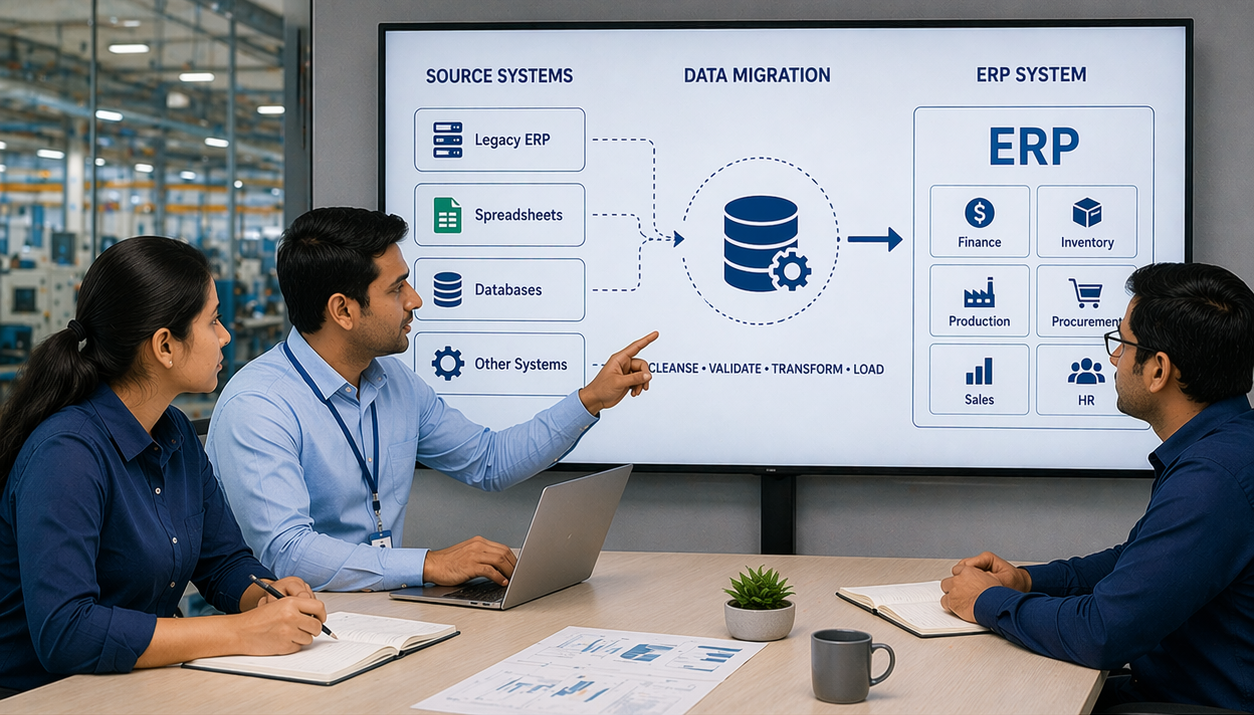
Step 4: Data Migration (Week 10 to 16)
Active loan portfolios (borrowers, loan terms, repayment schedules, NPA status), employee data, financial balances, and customer databases are migrated from your existing systems.
Step 5: Training & Go-Live (Week 14 to 20)
Role-based training for branch staff, collection teams, finance teams, and compliance officers. Phased go-live across branches with 30–60 days of post-go-live support.

Results from Real Healthcare Clients

From our actual healthcare implementations:

90%
reduction in medicine expiry wastage through automated FEFO inventory management
↓ Leakage
Revenue leakage reduced by identifying unbilled services, missed charges, and billing code errors
40–60%
procurement cycle reduction through automated purchase workflows and vendor management
1 Day
payroll processing reduced from 3–4 days to less than 1 day with integrated attendance
100%
audit trail readiness for NABH, replacing paper-based documentation
Real-Time
visibility into departmental costs and revenue for the first time

Results NBFC Clients See

Real outcomes from our ERP implementations for NBFCs:

RBI return preparation time reduced from 2–3 weeks to 2–3 days through integrated data and pre-built templates
Collection efficiency improved by 10–15% through automated reminders and structured field agent management
NPA identification achieved 30–45 days earlier with automated SMA classification and real-time monitoring
Branch-level P&L visibility enabled for the first time, supporting data-driven expansion decisions
Payroll processing across multiple branches reduced from a week to under 2 days
Audit readiness maintained year-round instead of last-minute preparation during inspections
Manual reconciliation effort reduced by up to 70% through automated loan accounting entries

Why TCB Infotech for NBFC

50+

ERP implementations. Zero failures. Since 2021. NBFC is one of our core industry verticals.

NBFC Expertise

We understand lending workflows, collection dynamics, NPA management, branch economics, and RBI compliance requirements.

Platform Flexibility

We implement Odoo, ERPNext, and custom solutions. We recommend what fits your NBFC category, not what is easiest for us.

35+ Team

35+ full-time professionals. 100% team retention. The same team works with you from start to go-live.

India + GCC Experience

Experience across India and GCC markets, handling financial services operations with regulatory and compliance complexity.

AI + Compliance Support

AI capabilities for NPA prediction, fraud detection, and collection optimisation with post-go-live support that evolves with RBI guidelines.

Frequently Asked Questions

How long does NBFC ERP implementation take?
For a single-product NBFC with under 10 branches: 4 to 6 months. For multi-product NBFCs with 20+ branches: 6 to 10 months. For MFIs or NBFCs requiring extensive custom lending module development: 8 to 12 months.
Can you migrate our active loan portfolio?
Yes. We migrate borrower details, loan terms, outstanding principal, accrued interest, repayment history, and NPA status. Every account is validated against your source data before go-live.
Will this replace our existing LOS/LMS?
It depends. If your current LOS/LMS works well, we integrate it with ERP for accounting, HR, and compliance. If not, we build lending modules on top of the ERP platform. We assess and recommend during the initial evaluation.
Does it handle RBI compliance reporting?
Yes. We configure pre-built templates for NBS returns, ALM statements, NPA reports, and regulatory filings. Data flows directly from your loan and accounting modules.
Can field collection agents use it on mobile?
Yes. Both Odoo and ERPNext support mobile usage. We configure apps for field agents with visit logging, payment collection, GPS tracking, and real-time sync.
Odoo or ERPNext for our NBFC?
Odoo is stronger for multi-branch NBFCs needing integrated accounting, HR, and CRM with visual customisation. ERPNext works well for smaller NBFCs and MFIs prioritising zero licensing costs. For complex lending products, both require custom development. We’ll give you an honest recommendation in our first conversation.

Operating your NBFC on disconnected systems?

Spending weeks on RBI returns? Let’s talk about what an integrated operation would look like for your specific NBFC category and scale.

Book Free NBFC Assessment