

TCB Infotech | Expert Odoo & ERPNext Implementation Partner

Schedule Call With Us
Predictive Maintenance

Predict Machine Failures Before They Happen

AI watches your machine signals, vibration, temperature and run hours, spots the early signs of wear, and flags which machine needs attention and roughly when. You fix things on a plan instead of in a breakdown.

50+ ERP and software projects. Zero failed projects since 2021.

CNC Press #4 Line A · Asset PR-0421
AI
62% Health
Warning
FailureHealthy
Vibration
High
Temperature
Rising
🔧
Maintenance due in about 9 days
Schedule a bearing check before the next run

Illustrative figures
Days
Warning before failure
Fewer
Unplanned stops
Planned
Maintenance, not reactive
Longer
Machine life
Why It Matters

A breakdown always costs more than a planned fix

When a machine stops without warning, you lose the run, the labour, the rushed repair and the order. Predictive maintenance moves the fix to a moment you choose.

Stop Reacting to Breakdowns

Fix the machine on a plan, not in a panic

An unplanned stop drags in overtime, a rushed spare part and a line that sits idle while everyone waits. When AI flags the machine days ahead, you plan the repair into a shift when it hurts least and keep the order on time.

  • Early warning instead of a sudden stop.
  • Repairs scheduled into planned downtime.
  • Fewer missed orders and rush charges.
A maintenance engineer planning a machine repair
Use the Data You Already Have

Your machines are already telling you when they are tired

Vibration creeping up, temperature climbing, run hours stacking, small changes that a person cannot track across a full floor. AI reads these signals alongside your maintenance history and ERP records, and learns the pattern that comes before a failure.

  • Signals from sensors and machine controllers.
  • Maintenance history and ERP work orders.
  • Patterns a person cannot watch by hand.
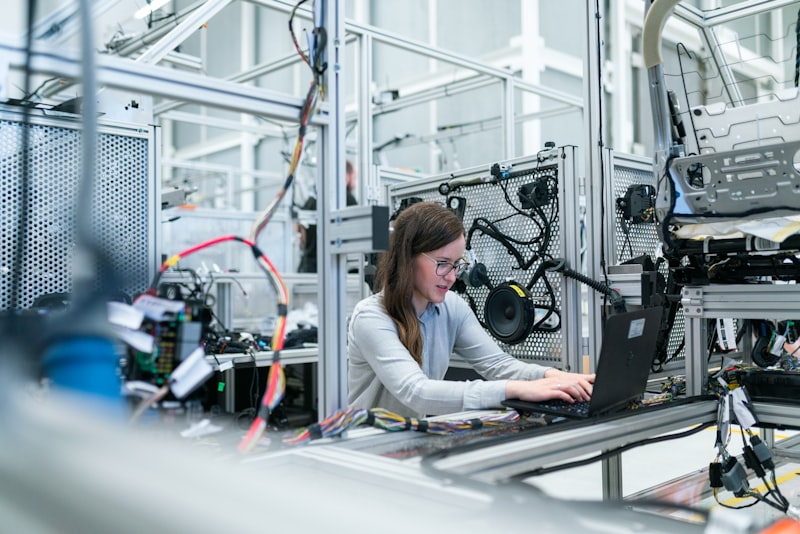
Sensor and machine data on a factory floor
The Signals It Reads

What the AI watches on every machine

It tracks each signal against the machine's own normal range and flags when the mix starts to drift toward failure. Figures below are illustrative.

Live signal read Compared with each machine's normal range
AI
Vibration
78%
Temperature
64%
Run hours
71%
Motor load
58%
Cycle time
47%
Vibration and run hours drifting together
The mix that came before the last two bearing failures
How It Works

From machine signals to a maintenance plan

1
Connect
We pull in sensor, machine and ERP data, plus your maintenance history.
2
Learn normal
The model learns each machine's normal running range and past failures.
3
Watch
It tracks every signal in the background and looks for early drift.
4
Predict
It flags which machine needs attention and roughly when.
5
Schedule
The warning becomes a work order planned into the right shift.
What It Predicts

The failures you want to catch early

The model is trained on your own machines, so it flags the wear patterns that actually happen on your floor.

Bearing and gear wear

Rising vibration and heat that point to a bearing or gear heading toward failure, days before it seizes.

🌡

Overheating

Temperature creeping above the normal range for a motor, spindle or drive, so you act before it trips or burns out.

🔌

Motor and drive strain

Motor load and current drifting in a way that signals a struggling drive or a developing electrical fault.

💧

Lubrication and flow issues

Pressure and flow readings that fall out of range, hinting at a blocked line, a failing pump or low lubrication.

Slowing cycle time

A machine quietly taking longer per cycle, an early sign of wear that shows up before any alarm.

📈

Quality drift

A rise in reject or rework rate tied to a specific machine, linking product quality back to machine condition.

What Changes

What predictive maintenance changes on the floor

Fewer
Unplanned breakdowns
Less
Downtime and idle labour
Planned
Repairs, not emergencies
Longer
Life from each machine
Fewer
Missed and late orders
Lower
Emergency repair spend
Why Us

Why manufacturers choose TCB Infotech

1
We know the ERP side
We build ERP and software, so we tie machine signals to your work orders, downtime and stock data, not just a dashboard.
2
We use what you have
We start with the signals your machines already produce, so you do not have to rip and replace to get going.
3
Model-agnostic
We pick the AI approach that fits your machines and data, trained on your own history, with no vendor lock-in.
4
Built for the shop floor
Warnings land as clear work orders your maintenance team can act on, not raw alerts nobody reads.
5
Practical first use case
We start with the machines where a failure hurts most, prove the value, then widen from there.
6
Proven delivery
50+ projects across industries, with zero failed projects since 2021.
FAQ

Predictive maintenance questions

What is predictive maintenance?
Predictive maintenance uses AI to watch machine signals such as vibration, temperature and run hours, spot the early signs of wear, and flag which machine needs attention and roughly when. You fix things on a plan instead of waiting for a breakdown.
What data does it need?
It works from the machine and sensor data you already collect, such as vibration, temperature, load and run hours, combined with maintenance history and ERP data like work orders and downtime records. Where a machine has no sensors, simple readings or manual logs can still be used to start.
How is this different from scheduled maintenance?
Scheduled maintenance services every machine on a fixed calendar, whether it needs it or not. Predictive maintenance watches the actual condition of each machine and flags the one that is heading toward failure, so you act on the machine that needs it at the right time.
Do we need to replace our machines or sensors?
No. We start with the signals your machines already produce and the data in your systems. If a critical machine has no monitoring at all, we can advise on a small set of sensors, but the aim is to use what you have first.
Which AI model do you use?
We are model-agnostic. We pick the approach that fits your machines and data rather than tying you to one vendor, and the models are trained and tuned on your own history.
How long before we see results?
Once we have enough machine history and a few failure examples to learn from, early warnings can start within a few weeks. Accuracy improves as the model sees more of your machines running over time.

See Which Machines You Could Catch Early

Book a free consultation. We will look at your machines, the data you already collect, and where an unplanned stop hurts most, and show you what predictive maintenance would cover for your floor.

Book a Free Consultation →

No commitment. A practical first look at predictive maintenance for your machines.