TCB Infotech | Expert Odoo & ERPNext Implementation Partner

Schedule Call With Us
Distribution ERP Software

Connect Every Link in Your Supply Chain, Warehouse & Delivery With Distribution ERP Software

Stockouts killing customer relationships. Overstock tying up working capital. Purchase orders placed in one system, sales orders in another, and warehouse receipts on paper. Distributors running across multiple locations with no single view of what is where.

TCB Infotech implements and customizes ERPNext, Odoo, and SAP S/4HANA for distribution and wholesale businesses worldwide giving you real-time visibility from supplier to end customer, across every warehouse, every country, every channel.

Distribution ERP Software
200+ Distributors Served
35% Avg. Cost Reduction
200+
Distribution Businesses Served Worldwide
35%
Average Reduction in Operating Costs
12 wks
Average Time from Sign-off to Go-live
96%
Client Retention Rate Year on Year
Distribution Industry Experience

Distribution Challenges We Solve Every Day

From warehouse blind spots to multi-country compliance, here is what disconnected systems cost distribution businesses and how we fix it.

Inventory You Cannot Trust

Stock levels differ between your system and the warehouse floor. Overstock sits idle in one location while the same item is on backorder elsewhere. Physical counts always produce surprises and write-offs average 8 to 12 percent annually.

Purchasing Disconnected from Sales

Purchase orders raised on gut feel. Demand spikes are invisible to procurement until stock runs out. Rush orders cost 30 percent more and still arrive late.

Multi-Warehouse Blind Spots

Each warehouse runs its own records. No consolidated view of total inventory, slow-movers, or which location is over-committed on outbound orders.

Order Fulfilment Delays

Sales orders in one system, picking on paper, dispatch updates after the truck leaves. Customers chase status by phone. 62 percent will not reorder after a late delivery.

No Margin Visibility by Product

Landed cost, freight, and duties not captured at product level. Margin calculated at company level not by SKU. Up to 22 percent of SKUs actively destroy margin.

Multi-Country Without Control

Multi-currency pricing, country tax rules, cross-border compliance, and consolidating financials across subsidiaries all handled through manual exports and reconciliation. Month-end close takes two weeks and still produces figures no one fully trusts.

No Real-time Supply Chain Visibility

Leadership makes decisions based on last week's report. No live dashboard for purchase pipeline, stock in transit, or inbound shipment status across the supply chain.

Other Distribution Challenges

Do not see your specific challenge here? We have solved ERP problems for 3PL providers, import-export businesses, spare parts distributors, FMCG wholesalers, and more. If you distribute goods and need ERP, we can help.

Talk to a Distribution ERP Consultant
Core Capabilities

Everything a Distribution Business Needs, Built Into One Connected System

From the moment a purchase order is raised to the moment a delivery is confirmed, every step is tracked, automated, and visible in real time.

πŸ“¦

Inventory Management ERP

Real-time stock levels across every location, updated on every transaction. No more manual counts as your source of truth.

  • Multi-warehouse stock visibility on one screen
  • Lot and serial number tracking with full traceability
  • FIFO, FEFO, LIFO valuation methods
  • Automatic reorder point alerts and purchase requests
  • Landed cost capture including freight, duties, and handling
🏭

Warehouse Management System

System-directed put-away, picking, packing, and dispatch. Reduce pick errors, speed up fulfilment, and eliminate paper-based warehouse workflows.

  • Bin and zone management within each warehouse
  • Barcode and QR scanning for goods receipt and picking
  • Batch picking and wave planning for high-volume operations
  • Cross-docking support for transit distribution
  • Real-time available-to-promise across all locations
πŸ›’

Order and Procurement Automation

Connect customer sales orders directly to supplier purchase orders. Eliminate the manual procurement cycle and prevent stockouts before they happen.

  • Demand-driven purchase order generation
  • Drop-shipment from supplier direct to customer
  • Multi-vendor price comparison and preferred supplier rules
  • Purchase approval workflows by value and category
  • Supplier performance tracking on delivery and quality
πŸ”­

Supply Chain Visibility

Track every shipment, every transfer, and every delivery stage from a single dashboard. Know before your customer asks.

  • Live inbound shipment tracking from supplier to warehouse
  • Inter-warehouse transfer management with two-way confirmation
  • Customer-facing delivery status and expected arrival dates
  • Exception alerts for delayed inbound and outbound shipments
  • Full audit trail from purchase order to delivery proof
🌍

Multi-Location and Multi-Country Operations

One system for every warehouse, subsidiary, and country you operate in. Multi-currency, multi-tax, and consolidated financials without spreadsheets.

  • Multi-company and multi-subsidiary in one instance
  • Multi-currency with live exchange rate integration
  • Country-specific tax and compliance configurations
  • Consolidated group financial reporting in real time
  • Inter-company transaction management and elimination
πŸ“Š

Real-time Analytics and Reporting

Know your margin by SKU, your stock turn by category, and your supplier reliability by vendor without pulling a single export.

  • Live dashboards for sales, inventory, and procurement
  • Margin analysis by product, customer, and channel
  • Demand forecasting using historical sales trends
  • Slow-mover and dead-stock reports with aging analysis
  • Customizable KPI dashboards by role and department
ERP Platforms

The Right Distribution ERP for Your Size, Budget, and Complexity

We implement all three leading platforms. Our job is to match the right system to your operation not to sell you the most expensive one.

ERPNext for Distribution
Open-source, fully customizable, and built for mid-size distributors who need enterprise features without enterprise pricing.
Best for: SME and mid-market distributors, wholesale businesses, regional operators
  • Multi-warehouse inventory with bin-level tracking
  • Lot and serial number traceability
  • Purchase order automation with reorder rules
  • Pricing rules, customer-specific price lists, and discounts
  • Delivery note, packing slip, and dispatch tracking
  • Full landed cost capture and inventory valuation
  • Open source no per-user license fees
10 wks
Avg. Go-live
$0
Software License Cost
Explore ERPNext for Distribution ⟶
Odoo for Distribution
A complete, modular platform covering distribution, eCommerce, CRM, and accounting with one of the best user interfaces in the market.
Best for: Growing distributors, B2B eCommerce, multi-channel wholesale operations
  • Advanced warehouse management with multi-step routing
  • Replenishment rules and demand forecasting
  • B2B eCommerce portal with customer-specific pricing
  • Drop-shipping and cross-dock operations
  • Barcode scanning and mobile warehouse operations
  • Integrated CRM, invoicing, and customer portal
  • 350+ third-party integrations via Odoo App Store
12 wks
Avg. Go-live
3x
Avg. ROI in Year 1
Explore Odoo for Distribution ⟶
SAP S/4HANA for Distribution
Enterprise-grade distribution management for large, complex, and multi-national operations requiring the highest levels of scalability.
Best for: Large distributors, global supply chains, multi-country and multi-entity groups
  • Extended warehouse management (SAP EWM)
  • Transportation management and route optimization
  • Advanced available-to-promise across global network
  • SAP Analytics Cloud for executive-level reporting
  • Multi-currency consolidation with live FX rates
  • AI-driven demand sensing and replenishment
  • Global compliance and regulatory reporting built in
24 wks
Avg. Go-live
31%
Avg. Cost Reduction
Explore SAP S/4HANA for Distribution ⟶
Our Approach

A Proven Implementation Process Built Around Your Operation

Every distribution business is different. We do not run cookie-cutter implementations. We start by understanding how your operation actually works, then configure the system around it.

1
Discovery and Process Mapping Weeks 1–3

We audit your current workflows, data, and pain points across purchasing, warehousing, sales, and finance. We map every handoff point where delays and errors occur, and define the exact configuration your business needs.

2
Configuration and Data Migration Weeks 4–8

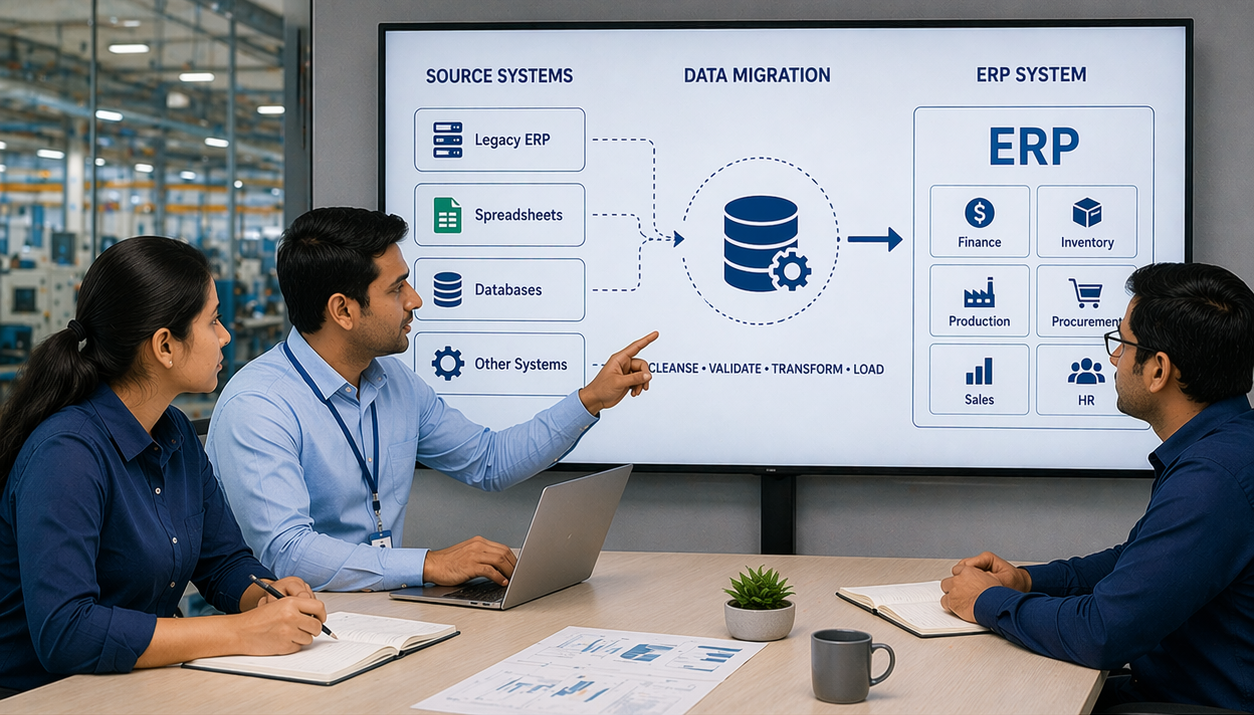
Your ERP is configured to match your actual business rules pricing tiers, approval workflows, warehouse structure, tax rules, and reporting requirements. Master data is cleansed, migrated, and validated before any user touches the system.

3
Pilot, Testing, and Training Weeks 9–11

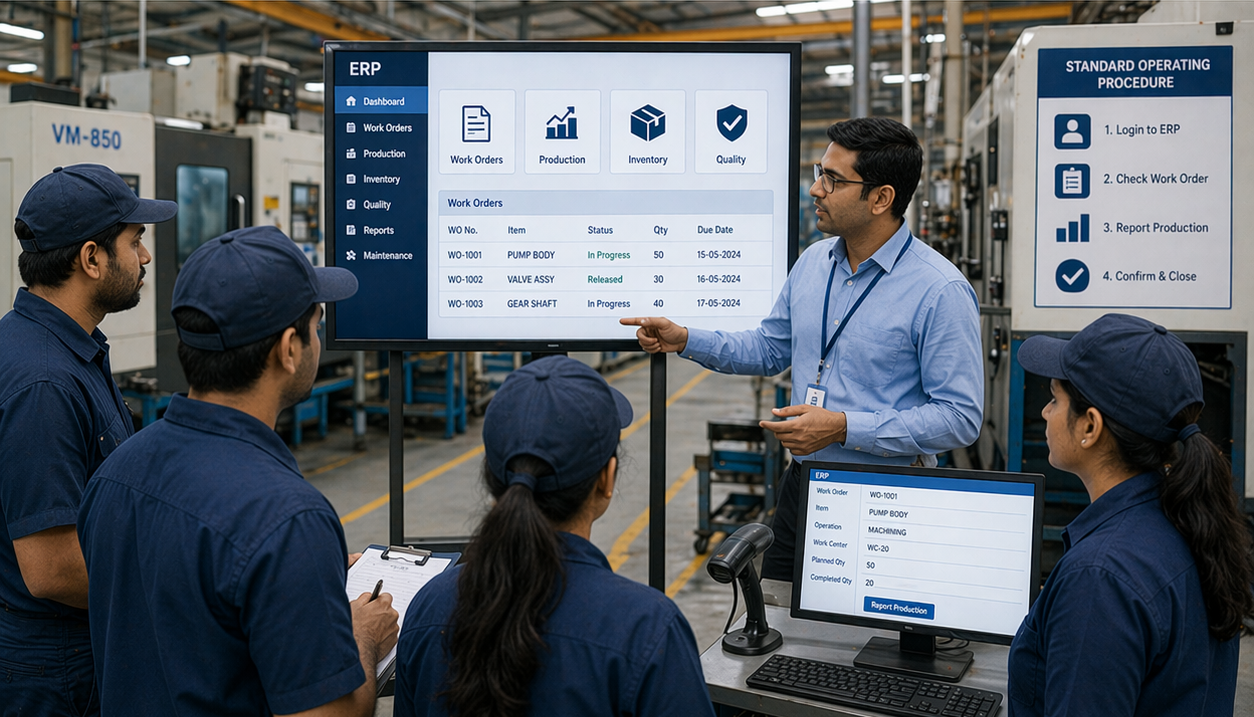
Live orders run through the new system in parallel before full cutover. Every user receives role-specific training on real workflows using their own data. Edge cases are resolved before go-live, not after.

4
Go-live and Ongoing Support Weeks 12+

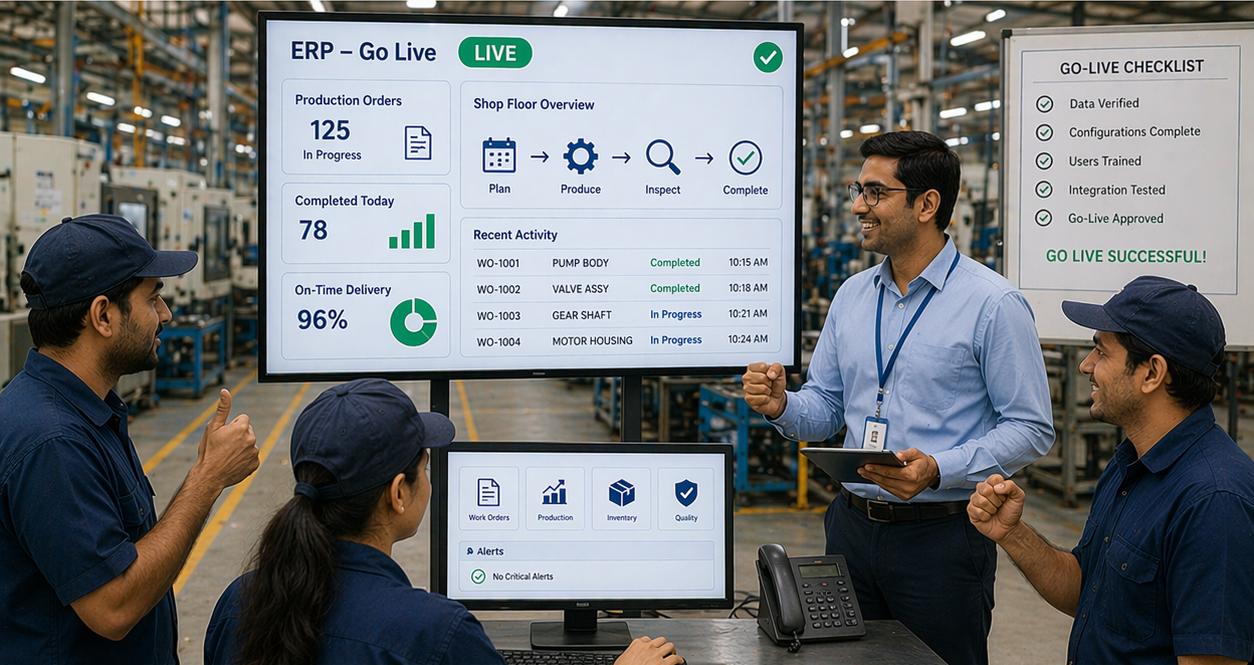
Full cutover with a dedicated hyper-care period and same-day support. Post go-live, we stay engaged optimising workflows, adding modules as you grow, and ensuring the system scales with your business.

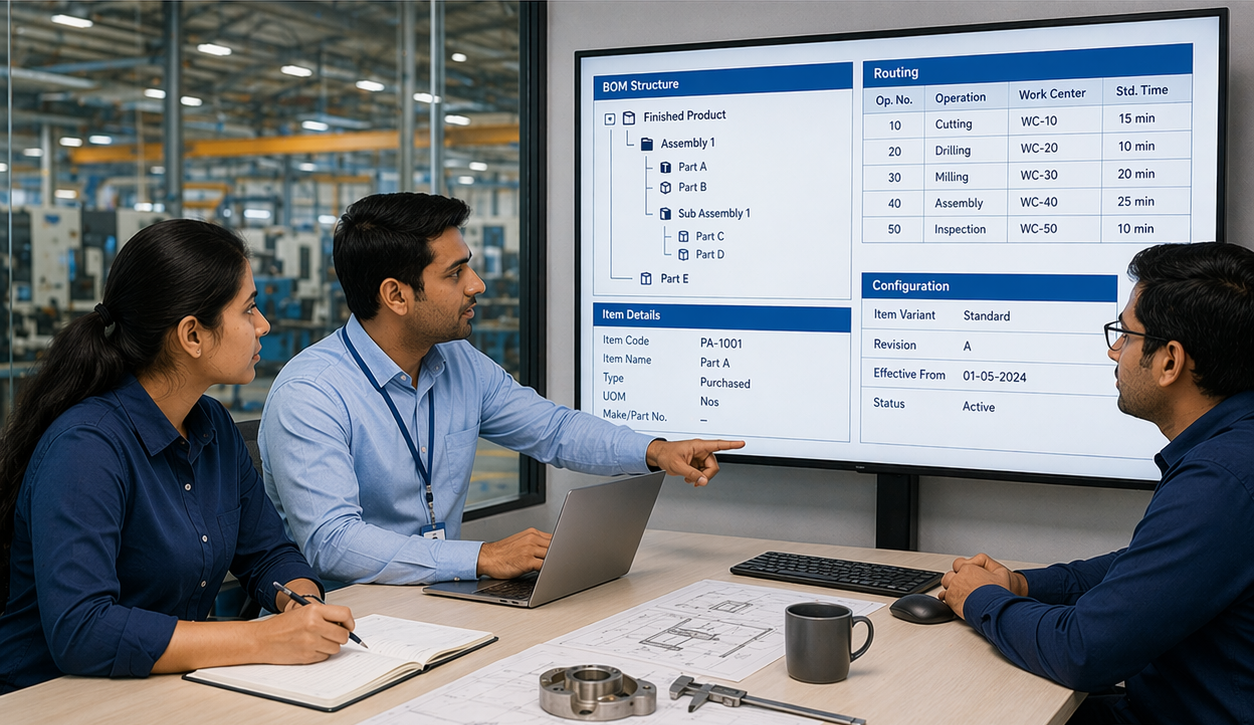
TCB Infotech distribution ERP implementation consultants working with client team on go-live process
12 wks
Avg. Go-live
Proven Results

What Distribution Businesses Achieve in the First Year

35%
Average Reduction in Inventory Carrying Costs
99%+
Inventory Accuracy Across All Locations
3x
Faster Order Processing and Dispatch
60%
Reduction in Manual Data Entry and Admin Work

How We Implement Distribution ERP

Distribution implementations require precision across inventory, pricing, and warehouse operations. Here’s our structured approach:

Step 1: Operations Assessment (Week 1 to 2)
We visit your warehouses, sit with your sales team, observe your receiving and dispatch process, and understand your supplier relationships. We document product categories, pricing structures, credit policies, and delivery workflows as they actually work.
Step 2: Data Cleanup and Master Setup (Week 2 to 4)
Distribution implementations live or die on data quality. We clean your product master, remove duplicates, standardise naming, fix units of measure, and structure your customer and supplier databases with proper pricing rules and credit limits.
Step 3: System Configuration (Week 4 to 10)
We configure warehouses, bin locations, reorder rules, sales workflows, purchase workflows, pricing tiers, credit policies, GST settings, and reporting dashboards. Every configuration is tested against your real operations.
Step 4: Warehouse Setup and Barcode Integration (Week 8 to 12)
Physical labels for bins, zones, and locations. Barcode scanners or mobile devices configured for receiving, picking, packing, and dispatch. Hands-on training for warehouse teams on daily scanning workflows.
Step 5: Data Migration (Week 10 to 14)
Product master, opening stock with batch/serial details, customer master with credit limits, supplier master with rate contracts, and financial opening balances are migrated from your existing systems like Tally.
Step 6: Go-Live and Stabilisation (Week 14 to 20)
Phased go-live: inventory and purchasing first, then sales and delivery, then accounting integration. 15 to 60 days post-go-live support. We’re available when a 5,000-piece order hits a barcode issue at 8am.

Distribution ERP Frequently Asked Questions

What is distribution ERP software and how is it different from standard ERP?
Distribution ERP software is specifically designed for wholesale, supply chain and distribution businesses. Unlike standard ERP systems that mainly focus on finance and inventory, distribution ERP handles multi-warehouse operations, route planning, demand forecasting, supplier coordination, customer-specific pricing and real-time stock visibility across all locations.
Which ERP is best for distribution companies ERPNext, Odoo or SAP S/4HANA?
ERPNext is ideal for small and mid-size distributors looking for a cost-effective and highly customizable solution. Odoo works well for growing distributors needing integrated CRM, inventory, accounting and eCommerce in one platform. SAP S/4HANA is best for large enterprise distributors operating across multiple countries with advanced analytics and global compliance requirements.
How long does a distribution ERP implementation take?
ERPNext implementations usually take 10–14 weeks. Odoo projects generally require 12–18 weeks depending on integrations and modules. SAP S/4HANA implementations for enterprise distribution businesses can take 20–28 weeks or longer depending on operational complexity and global requirements.
Can distribution ERP handle multi-warehouse and multi-country operations?
Yes. Distribution ERP platforms support unlimited warehouse locations, stock transfers, real-time inventory visibility, multiple currencies, tax structures and multi-company operations. SAP S/4HANA is especially powerful for large global groups requiring consolidated reporting and intercompany transactions.
How does ERP reduce inventory costs for distributors?
ERP reduces inventory costs through automation, accurate stock tracking and demand forecasting. Businesses can avoid overstocking, reduce dead inventory, automate reorder points and gain visibility into slow-moving products. Most distributors see significant reductions in inventory carrying costs after implementation.
Can we integrate our existing systems like Shopify, 3PL or logistics platforms?
Yes. Distribution ERP can integrate with Shopify, WooCommerce, Magento, courier systems, warehouse management software, payment gateways and third-party logistics providers. ERPNext and Odoo offer strong API integrations while SAP S/4HANA supports enterprise-grade integration frameworks.
Is cloud ERP better than on-premise ERP for distribution businesses?
Cloud ERP is now the preferred choice for most distribution businesses because it reduces infrastructure costs, supports remote access and simplifies updates and maintenance. However, businesses with strict compliance or data sovereignty requirements may still choose private cloud or on-premise deployment.
What support do we get after go-live?
Every implementation includes post-go-live hyper-care support, ongoing maintenance, bug fixes, training and system optimization. We also provide long-term AMC support plans, custom development and integration support as your distribution business grows.

Distribution warehouse with connected ERP system
Get Started

Ready to Connect Your Entire
Distribution Operation?

Every distribution business on this page started with a 30-minute conversation. We listened to their challenges, assessed their current setup, and showed them exactly what was possible. Let us do the same for yours at no cost and with no obligation.