Distribution is deceptively complex. From the outside it looks straightforward: buy products, store them, sell them, ship them. But every distributor knows the reality is messier than that. You are managing thousands of SKUs across multiple warehouses, handling customer-specific pricing for different tiers, tracking batch numbers and expiry dates, chasing payments from buyers on 30 to 90 day credit terms, coordinating with dozens of suppliers who all have different lead times, and trying to keep margins healthy in a business where a 2% pricing error on a high-volume product can wipe out a month of profit. Most Indian distributors run this operation on Tally for accounting, Excel for inventory, WhatsApp for order coordination, and memory for everything else. The problems start small (a missed reorder, a pricing mistake, a lost delivery) and compound until the entire operation feels like it is running on borrowed time.
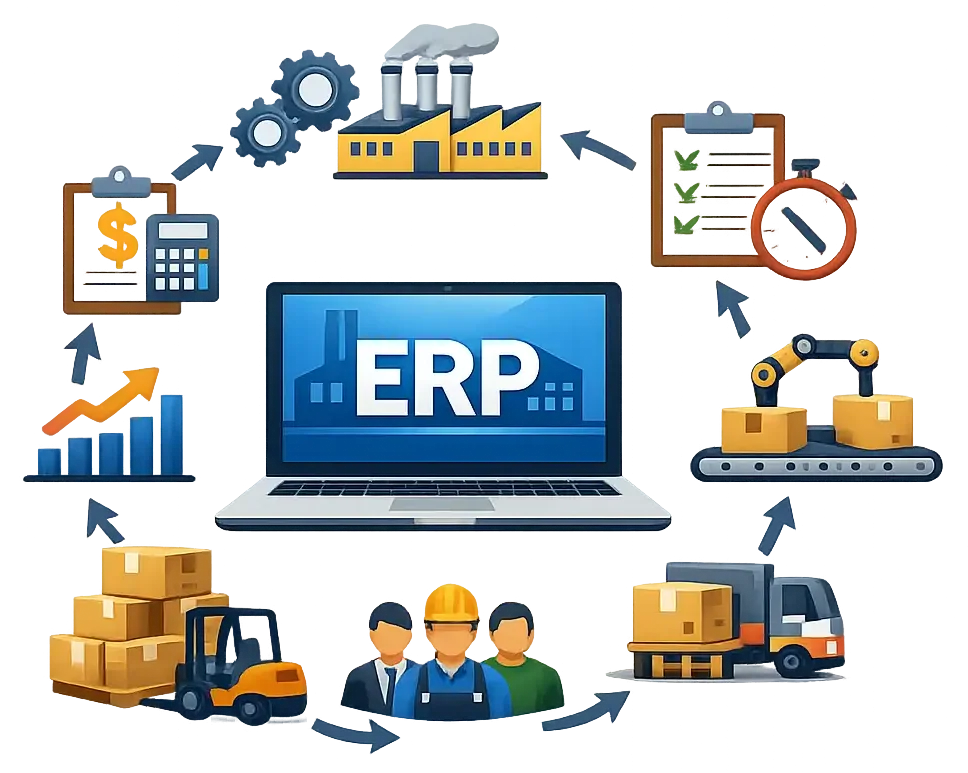
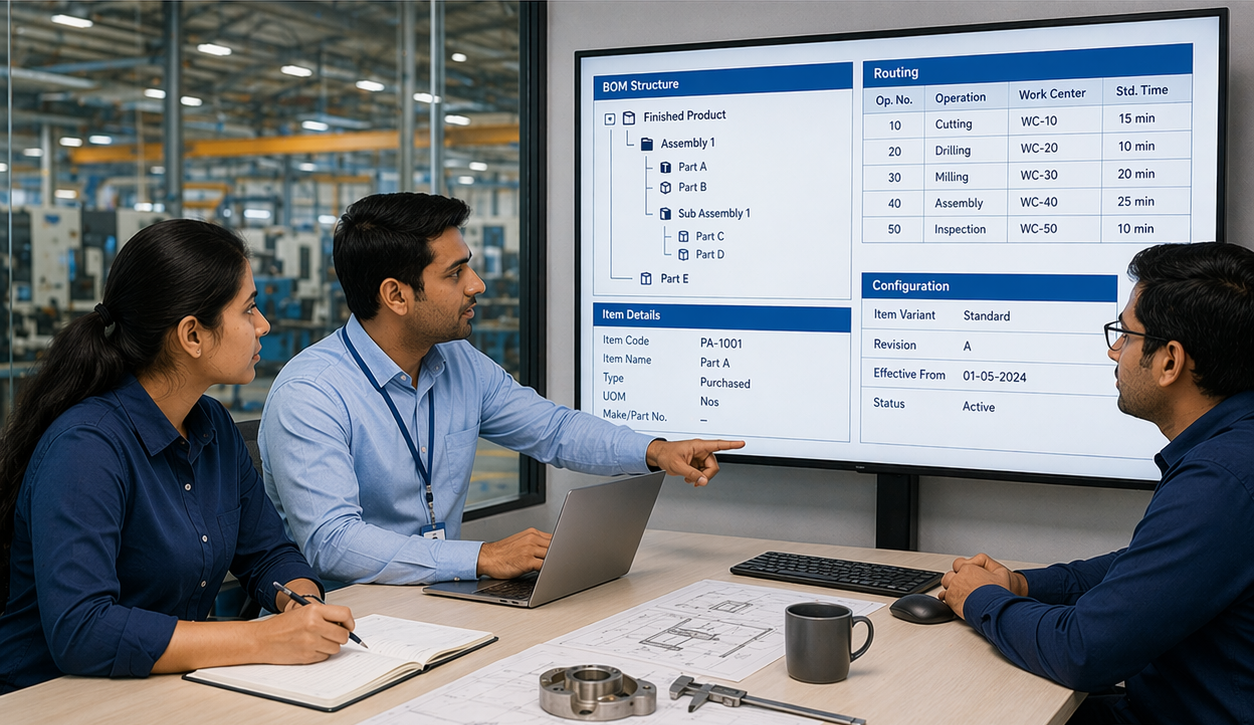
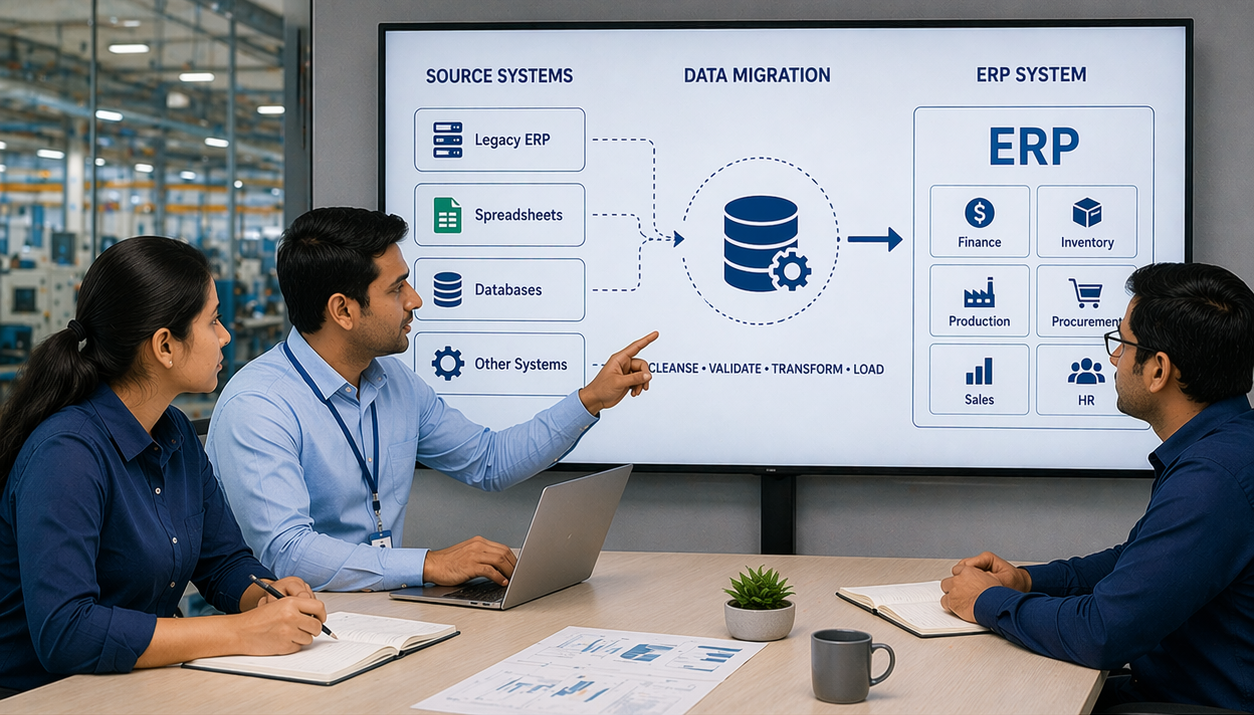
At TCB Infotech, we implement Odoo and ERPNext for distribution and wholesale businesses to replace disconnected systems with a single platform where inventory, purchasing, sales, warehousing, accounting, and logistics all connect. Not a generic ERP with distribution bolted on. A system configured for how distribution actually works.
Book Free Distribution AssessmentHere is what changes when a distributor moves from disconnected tools to a properly implemented ERP:
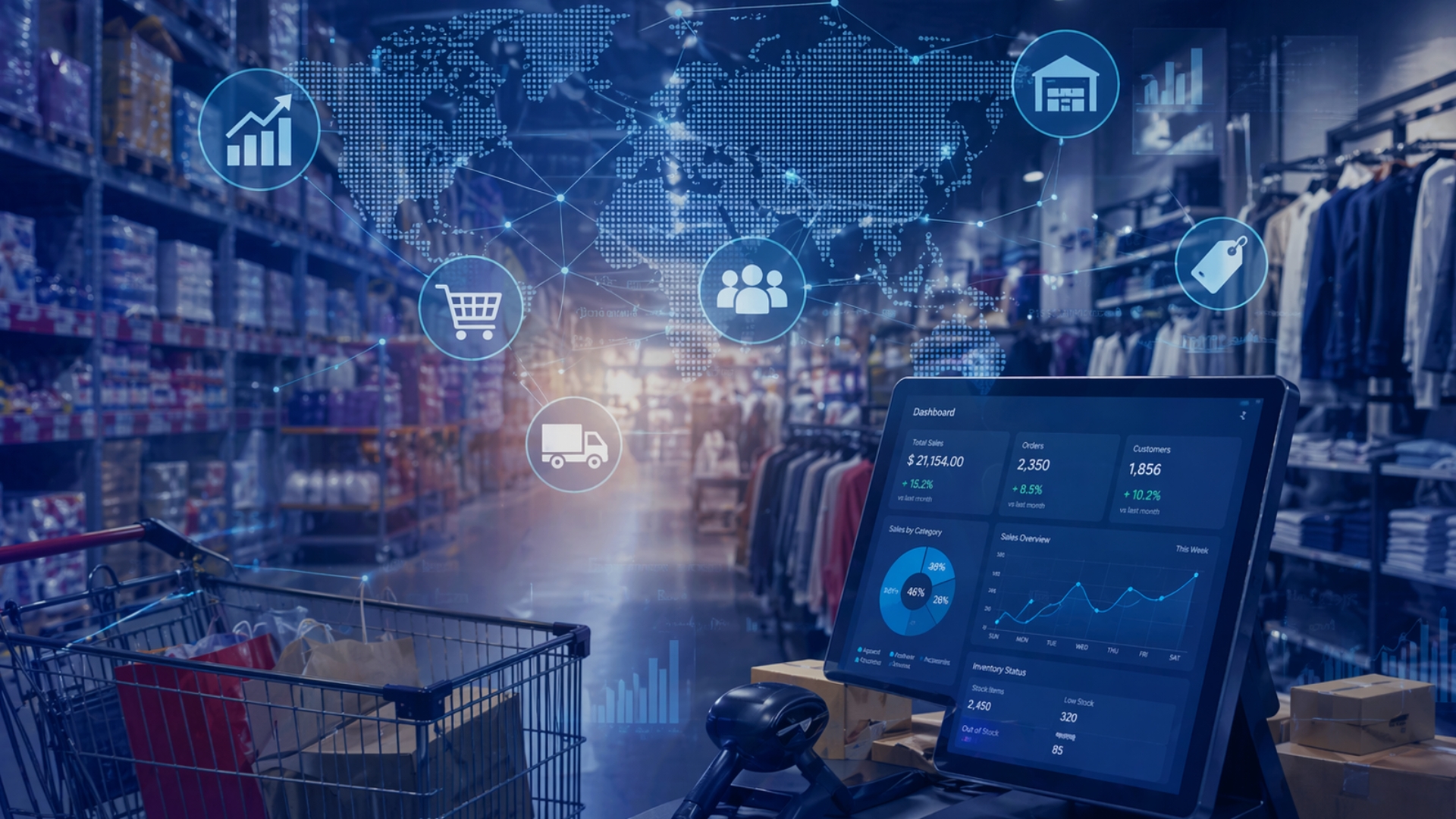
You know your real stock levels at all times. Every warehouse, every location, every bin. Real-time. Not yesterday’s Excel export. Not a count someone did last week. Actual stock including committed orders, in-transit goods, and quality holds.
Purchase orders generate themselves. Set reorder levels and minimum quantities per product. When stock drops below thresholds, the system creates purchase drafts for the right supplier at the right price.
Tier-based pricing, customer-specific rates, volume discounts, promotional pricing, and contract rates all managed in one place. Correct pricing applies automatically during quotation.
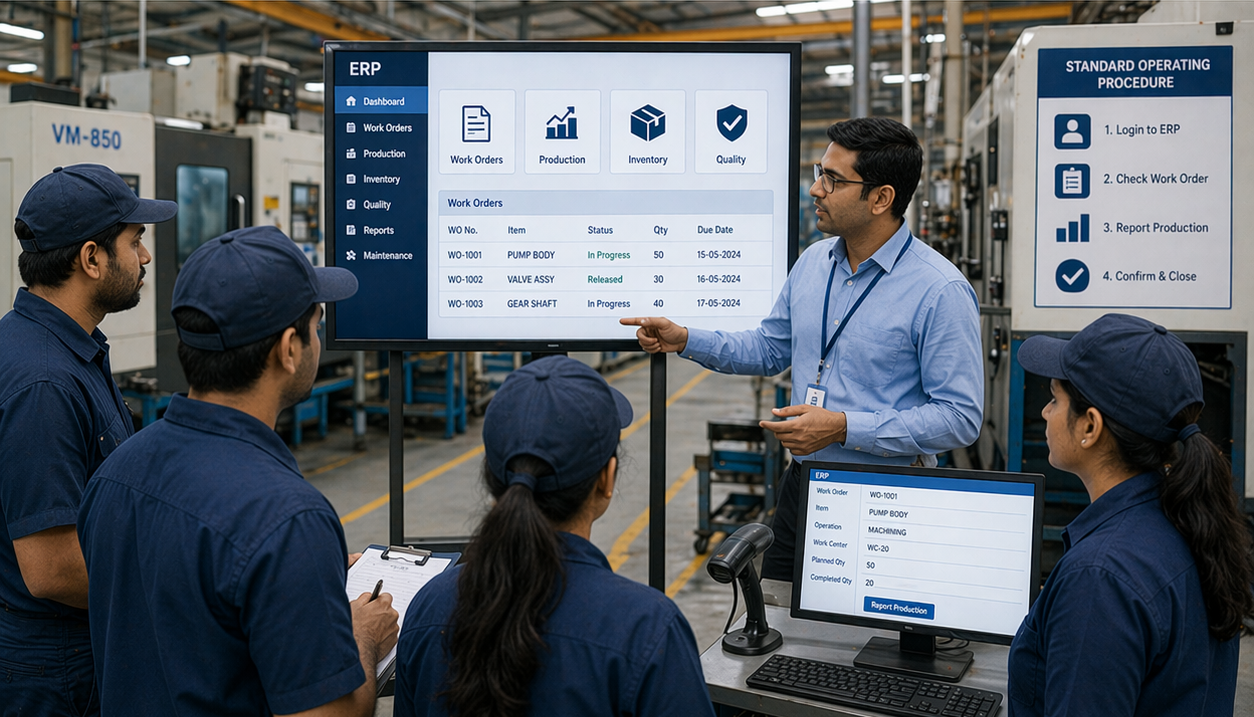
Orders flow from quote to delivery to invoice without gaps. Inventory gets reserved, picking lists generate, warehouse fulfils with barcode scanning, and invoices trigger automatically.
Credit limits are enforced automatically. Orders exceeding limits get blocked. Ageing reports track overdue payments so you don’t ship to customers with pending dues.
You see margins by product, customer, and territory. Including landed costs like freight and duties. Identify which products and customers drive profit—and which don’t.
Setting expectations matters for distributors moving from disconnected systems:
Real problems distributors face — and how we solve them with structured ERP systems.
Stock-outs on fast-moving products, excess stock on slow movers
ABC analysis, automated reorder rules with min/max levels, demand forecasting based on historical consumption, and real-time stock visibility across all locations
No real-time visibility across multiple warehouses
Multi-warehouse inventory with real-time inter-warehouse transfer tracking, barcode scanning, and consolidated stock reports
Pricing errors eroding margins
Customer-specific pricelists, tiered pricing, volume discounts, and rate contracts that auto-apply on quotations and sales orders
Manual order processing causing delays
Quote to order to picking to delivery to invoice workflow. Automated. One click at each stage, not re-entry in five different systems.
Credit limit violations and overdue collections
Customer credit limits with automatic order blocking. Ageing reports. Payment follow-up automation via email, SMS, or WhatsApp.
Batch and expiry tracking for regulated products
Batch/lot tracking with FEFO (First Expiry First Out) logic, expiry alerts, and full traceability from supplier to customer
Supplier management chaos across dozens of vendors
Vendor master with performance rating, rate contracts, three-way matching (PO vs receipt vs invoice), and automated RFQ generation
No margin visibility at product or customer level
Real-time profitability analysis by product, customer, territory, and salesperson. Landed cost calculation including freight and duties.
GST compliance headaches
Automated GST computation on every transaction. E-invoicing integration. GSTR-1/3B report generation. TDS handling for applicable transactions.
Returns and claims management
Return workflows with reason tracking, credit note generation, stock reintegration or disposal, and claim settlement against suppliers
Distribution is not one business. An FMCG distributor moving 10,000 SKUs daily operates differently from a building materials dealer managing heavy goods with long lead times. Here are the segments we know from direct implementation experience:
Every distribution implementation we deliver is built around these core capabilities:
Beyond standard ERP, we add AI layers that give distributors a competitive edge in operational efficiency:
We implement both Odoo and ERPNext for distribution businesses. The choice depends on your specific needs:
Distribution implementations require precision across inventory, pricing, and warehouse operations. Here’s our structured approach:
From our actual healthcare implementations:
Real outcomes from our ERP implementations for distribution businesses:
ERP implementations. Zero failures. Since 2021. Distribution is one of our core verticals.
We have implemented for distributors in India, UAE, Oman, and Saudi Arabia, handling multi-location, multi-currency, and cross-border operations.
We implement both Odoo and ERPNext. We recommend what fits your operation, not what is easier for us.
35+ full-time professionals. 100% team retention. Consistent team throughout your project.
We understand distribution economics: thin margins, high volumes, credit risk, and supply chain complexity.
AI-enhanced ERP capabilities for demand forecasting, smart replenishment, and document processing. Post-go-live support that stays with continuous optimisation.
Let’s talk about what connected operations would look like. No pitch. Just a practical conversation about your specific challenges.
Book Free Distribution Assessment